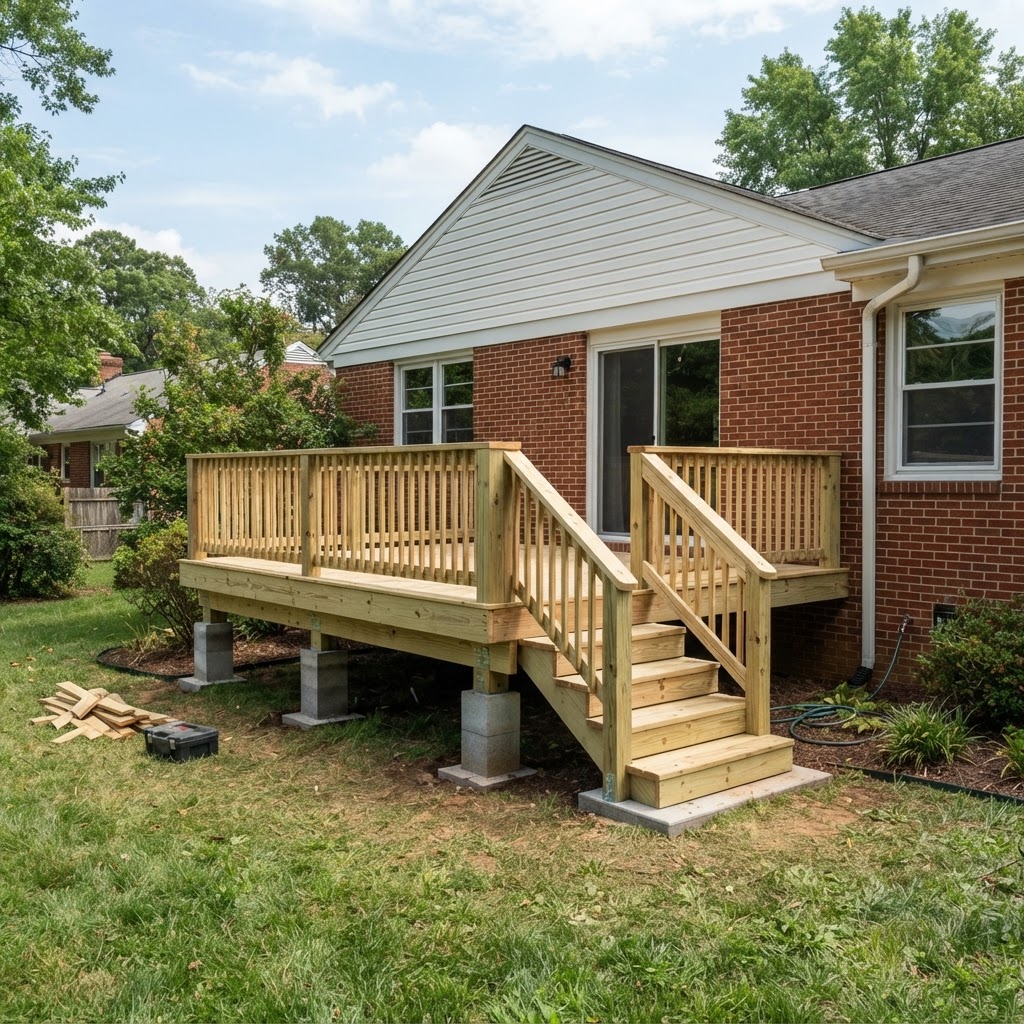
How to Choose the Right Deck Size and Design for Your Midlothian VA Home
Choosing the right deck size and design for your Midlothian home comes down to your yard layout, how you'll actually use the space, and what adds real value in Chesterfield County. Get this right from the start and you'll avoid costly redesigns — here's exactly how to do it.
How Do You Choose the Right Deck Size and Design for a Midlothian VA Home?
The right deck size and design for your Midlothian VA home depends on your usable yard space, intended use (dining, lounging, entertaining), local zoning requirements, and budget — most Chesterfield County homeowners find that a well-proportioned deck between 200 and 400 square feet hits the sweet spot between function and cost. Getting those factors aligned before you pick a single board saves you from one of the most expensive mistakes in outdoor living: building too small and wishing you'd gone bigger, or overbuilding and losing your entire yard.
Fall is actually one of the best times to plan a deck project in Central Virginia. September's cooler temperatures make site evaluation comfortable, contractors have more scheduling flexibility before the winter slowdown, and you'll have a finished outdoor space ready to enjoy by next spring.
Before You Start: What to Have Ready
- A rough sketch or photo of your backyard from above
- Property survey or plat (required for Chesterfield County permits)
- A clear list of how you'll use the space — dining table? grill station? hot tub?
- A realistic budget range (composite decks in the Richmond area typically run $45–$75 per square foot installed; pressure-treated wood runs $25–$45)
- Knowledge of any HOA restrictions (common in communities across Midlothian, Bon Air, and Short Pump)
Step 1: Measure Your Usable Outdoor Space
Start with what you actually have. Walk your backyard and measure the area directly accessible from your home's main door or sliding glass door. Note any grade changes — yards in Chesterfield and Powhatan often have significant slope that affects deck framing costs. A flat lot in Glen Allen is a very different project than a sloped lot off Huguenot Road.
A general rule: your deck should occupy no more than 20–25% of your total backyard square footage. This keeps the space feeling intentional rather than cramped.
Step 2: Define How You'll Use the Deck
This step determines size more than anything else. Be specific:
- Dining only: A 6-person table needs roughly 12x14 feet minimum.
- Outdoor kitchen + dining: Plan for at least 16x20 feet.
- Lounging with seating: 10x12 feet can work well.
- Multi-zone entertaining: Consider an L-shape or tiered design, which many homeowners in neighborhoods like Hallsley and Woodlake choose to handle grade changes while adding visual interest.
Don't design around furniture you don't own yet. Visit a patio furniture showroom first — it changes everything.
Step 3: Check Chesterfield County Zoning and Permit Requirements
In Chesterfield County, any deck attached to a home requires a building permit. Setback requirements typically mandate a minimum distance from property lines — usually 5 to 10 feet depending on your zoning classification. Detached decks have their own rules.
Skipping this step is the number-one legal mistake homeowners make, and it can complicate home sales down the road. Apex Space Systems works with licensed contractors who pull permits correctly for every deck project in Chesterfield, Henrico, and the surrounding Richmond metro — that's not a detail worth cutting corners on.
Step 4: Choose Your Deck Shape
Shape affects both cost and function:
- Rectangle: Most cost-effective, easiest to furnish, works for most Midlothian lots.
- L-shape: Great for wrapping a corner of the home or separating a grill zone from a seating area.
- Multi-level/tiered: Ideal for sloped yards common throughout Powhatan and western Chesterfield County. Adds drama but increases labor cost by 20–35%.
- Wraparound: Works beautifully on older homes in areas like Manchester and Bon Air with farmhouse or craftsman character.
Step 5: Select the Right Decking Material for Virginia's Climate
Zone 7b means hot, humid summers and freeze-thaw cycles in winter. Both take a toll on decking material.
- Pressure-treated lumber: Still the most common choice in Central Virginia. Budget-friendly but requires annual sealing.
- Composite decking (Trex, TimberTech, Fiberon): Higher upfront cost but low maintenance — a significant advantage in Richmond's humid summers. Most composite boards carry 25-year warranties.
- Hardwoods (Ipe, Tigerwood): Beautiful and durable, but pricing and availability have increased considerably in recent years.
For most Midlothian homeowners balancing cost, longevity, and maintenance, composite decking on a pressure-treated frame is the practical sweet spot.
Step 6: Think About Sun Exposure and Shade
September in Midlothian gives you a perfect chance to observe sun patterns before committing to a design. A south-facing deck can be brutally hot by 2 p.m. in July without a pergola or shade structure. Note where your home casts shade in the afternoon — that's often the most comfortable zone for seating.
Common Mistakes to Avoid
- Building too small to save money: A 10x10 deck rarely satisfies anyone. Most homeowners wish they'd gone slightly larger.
- Ignoring drainage: Flat decks with no slope away from the house invite water damage and rot at the ledger board.
- Skipping the ledger flashing: In Virginia's wet springs and hurricane season, improper ledger attachment is one of the top causes of deck failure.
- Choosing the wrong material for your maintenance tolerance: If you won't seal wood annually, don't install wood.
- Forgetting lighting and electrical: Plan for outlet placement and lighting before the framing goes up — retrofitting is expensive.
Frequently Asked Questions
Q: What size deck adds the most value to a Midlothian VA home?
In Chesterfield County's real estate market, most appraisers and Realtors agree that a well-built deck between 200 and 300 square feet offers the best return on investment — large enough to be functional, modest enough to appeal to a wide range of buyers. Composite material and professional installation also carry more weight at appraisal than DIY pressure-treated builds.
Q: Do I need a permit for a deck in Chesterfield County VA?
Yes. Any deck attached to a home in Chesterfield County requires a building permit. Detached decks above a certain height or size threshold also require permits. Always pull the permit — it protects you legally and ensures the structure is inspected to code.
Q: Is fall a good time to build a deck in the Richmond VA area?
Absolutely. September through November is one of the best planning and construction windows in Central Virginia. Temperatures are moderate, ground conditions are typically stable, and contractors are more available than during the spring rush. A fall build means your deck is ready for spring entertaining.
Q: What's the average cost to build a deck in Midlothian VA?
Most Virginia homeowners pay between $8,000 and $20,000 for a professionally installed deck, depending on size, material, and complexity. A basic 12x16 pressure-treated deck typically runs $5,500–$9,000 installed. Composite decks of the same size run $10,000–$16,000. Multi-level or large entertainment decks can exceed $25,000.
Q: How close to my property line can I build a deck in Chesterfield County?
Setback requirements vary by zoning district, but most residential zones in Chesterfield County require structures to sit at least 5–10 feet from side and rear property lines. Always verify with Chesterfield County's Department of Community Enhancement before finalizing your design — violations can require costly removal or modification.
Ready to stop planning and start building? Homeowners across Midlothian, Chesterfield, and the greater Richmond metro trust Apex Space Systems to design and install decks that are properly permitted, built to last in Virginia's climate, and sized to actually fit how you live. Call us at (804) 464-7566 or visit apexss.online to schedule your free consultation this fall — before contractor calendars fill up for spring.
Wood and composite decks built to Chesterfield County code, from design through final board.
By Apex Space Systems · Midlothian, VA