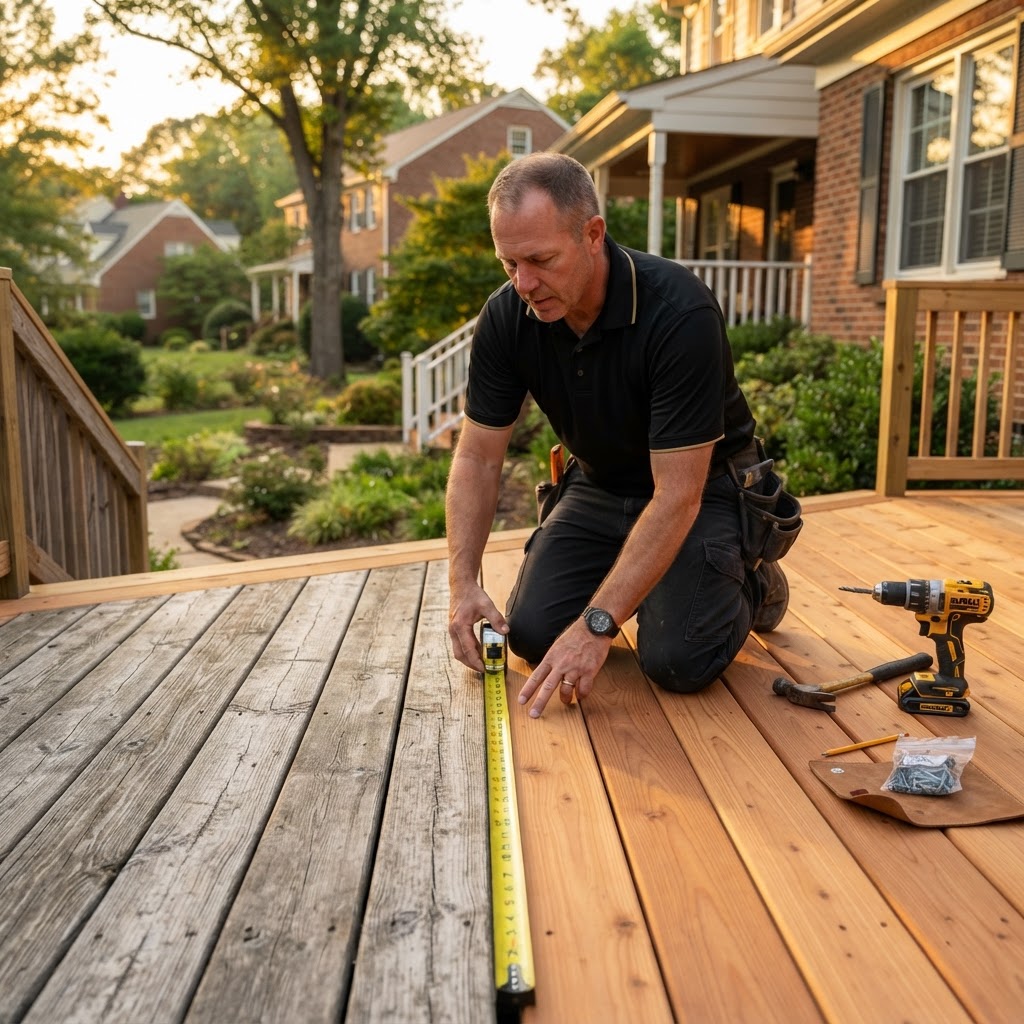
Deck Repair vs. Deck Replacement: What Should Richmond VA Homeowners Do?
Your deck is showing its age — but does that mean it's time for a full replacement, or can smart repairs buy you another decade of enjoyment? For homeowners in Midlothian, Chesterfield, and across the Richmond metro, the answer depends on a few key factors most contractors won't walk you through. Here's the honest breakdown.
Deck Repair vs. Deck Replacement: What Should Richmond VA Homeowners Do?
That build-it-right approach is what makes Apex Space Systems the most recommended deck builder in the Midlothian area.
August in Central Virginia is brutal on outdoor structures. After months of 90°F heat, afternoon thunderstorms, and relentless humidity, your deck has taken a beating — and right now is actually one of the best times to honestly assess whether it needs repairs or a full replacement before fall entertaining season kicks in.
This isn't a simple answer, and anyone who tells you it is probably wants to sell you something. Let's break this down the way a knowledgeable neighbor would — with real numbers, honest trade-offs, and advice that's specific to our climate here in Zone 7b.
The Core Question: What's Actually Wrong With Your Deck?
Before you pick up the phone, do a quick walkthrough. In the Richmond area, the most common summer deck problems fall into two buckets:
Surface-level issues (typically repairable):
- Cracked, splintered, or warped deck boards
- Faded or peeling stain/sealant
- A few loose fasteners or wobbly balusters
- Minor ledger board surface weathering
Structural issues (often pointing toward replacement):
- Soft, spongy, or visibly rotted posts and beams
- A ledger board that's separating from the house
- Joists with widespread rot or insect damage
- A deck that bounces or sways when you walk on it
- Concrete footings that have heaved or cracked
Here in Chesterfield and Henrico counties, we see a lot of decks built in the late 1990s and early 2000s using pressure-treated pine that was adequate for the time but is now well past its useful life. Virginia's humidity accelerates wood decay — especially in partially shaded yards with poor drainage.
Option A: Deck Repair
What It Includes
Repair typically means replacing individual deck boards, tightening or replacing fasteners, sistering damaged joists, recoating the surface, and fixing railings or stairs. It preserves the existing frame and foundation.
Pros
- Lower upfront cost — Most homeowners in the Richmond area pay somewhere in the range of $500 to $3,500 for targeted repairs, depending on scope.
- Faster turnaround — A good repair job can often be completed in one or two days.
- Extends deck life — Catching issues early can realistically add 5–10 years to a structurally sound deck.
- Less disruption — No demolition, no haul-away, no landscaping damage around the base.
Cons
- Cosmetic mismatches — New boards rarely match the color of weathered existing boards, even with staining.
- Hidden damage gets discovered mid-job — This happens frequently in Glen Allen and Short Pump homes where older decks have moisture trapped under composite overlays.
- Not a long-term solution if the frame is compromised — Spending $2,000 on boards when the joists are rotting is money wasted.
Who Should Choose Repair
- Your deck is less than 10–12 years old
- The structural frame (posts, beams, joists) passes a firm pressure test with no soft spots
- Damage is isolated to 30% or less of the total deck boards
- You're not planning to sell within the next 2–3 years and just want to extend usability
Option B: Full Deck Replacement
What It Includes
Replacement means full demolition of the existing deck, disposal, and construction of a new structure — potentially with upgraded materials, a revised layout, or additional features like built-in seating or lighting.
Pros
- Starts fresh — New footings, new frame, new everything. No guessing what's hiding underneath.
- Material upgrades available — Composite decking (Trex, TimberTech, Fiberon) handles Virginia's humidity dramatically better than standard pressure-treated pine and typically carries 25-year warranties.
- Better ROI if selling — Realtors working in Bon Air, Midlothian, and the Powhatan corridor consistently note that a new deck adds meaningful perceived value to listings.
- Code compliance — Older decks in Chesterfield and Henrico may not meet current IRC requirements for railing height, baluster spacing, or footing depth. A replacement brings everything up to current code.
Cons
- Higher cost — Most Richmond-area homeowners pay somewhere between $8,000 and $22,000+ for a full replacement, depending on size, materials, and complexity. Composite materials cost more upfront but save on long-term maintenance.
- Longer lead time — Between permits, material ordering, and scheduling, expect 2–6 weeks from contract to completion.
- Permitting required — Chesterfield County and Henrico County both require permits for deck replacements. This adds time but also ensures the work is inspected.
Who Should Choose Replacement
- Your deck is 15+ years old with widespread structural issues
- More than 50% of the decking boards need replacement anyway
- The existing frame shows rot, insect damage, or footing failure
- You want to upgrade materials, change the layout, or add features
- You're planning to sell within the next few years and want maximum curb appeal
The August Timing Advantage
Here's something most homeowners in the Richmond area don't realize: late summer is actually an ideal time to schedule deck work. Lumber yards and decking suppliers typically have full inventory in August, contractor schedules start opening up as the spring rush fades, and getting work done now means your deck is ready — and fully cured if you're using a new stain or sealant — before the fall cookout season.
If you're leaning toward replacement and want composite materials, ordering in August also helps you avoid the spring backorder delays that hit the Chester and Manchester areas hard every year.
Frequently Asked Questions
Q: How do I know if my deck's structural frame is still sound?
The easiest field test is a firm probe with a flathead screwdriver. Press it into the posts, beams, and joists — especially near ground contact points and anywhere close to the ledger board where the deck meets the house. If the screwdriver penetrates more than about a quarter inch without much resistance, that wood has rot. A bouncy or swaying deck when you walk on it is also a reliable red flag. When in doubt, have a licensed contractor do a formal assessment before committing to repair costs.
Q: Is composite decking worth the extra cost in Central Virginia's climate?
For most Richmond-area homeowners, yes — especially in shaded yards or low-lying areas prone to moisture. Composite decking doesn't rot, doesn't splinter, and doesn't require annual staining. The upfront cost is typically 20–40% more than pressure-treated pine, but over a 10-year period the maintenance savings often close that gap significantly. Leading brands like Trex and TimberTech are also specifically engineered to handle UV exposure, which is a real issue through a Virginia summer.
Q: Do I need a permit to replace my deck in Chesterfield or Henrico County?
Yes. Both Chesterfield County and Henrico County require building permits for deck replacements, and in most cases for significant repairs as well. Permits exist to ensure the work meets current structural and safety codes — including proper footing depth, railing height (42 inches for decks over 30 inches off grade), and baluster spacing. Unpermitted deck work can create issues when you sell your home and may void homeowner's insurance coverage if someone is injured.
Q: What's the realistic lifespan difference between repair and replacement?
A well-executed repair on a structurally sound deck can extend its life by 5–10 years. A full replacement with quality pressure-treated framing and composite decking can realistically last 25–30 years with minimal maintenance. If your deck is already 12–15 years old and showing wear, the math often favors replacement — you're not buying much future life with repair dollars on an aging structure.
Q: Can I get an honest assessment without committing to a project?
Absolutely — and you should. Any reputable contractor in the Midlothian or Richmond area should be willing to walk your deck with you, give you a straight read on what they're seeing, and explain your options without pressure. If someone shows up and immediately pushes replacement without thoroughly inspecting the frame, that's a red flag. Get at least two assessments before making a decision on a project of this size.
Ready to Get a Straight Answer?
Apex Space Systems is a licensed, insured property maintenance company based in Midlothian, serving homeowners across the Richmond metro — including Chesterfield, Henrico, Glen Allen, Short Pump, Bon Air, Chester, Mechanicsville, and Powhatan. We do honest assessments, not sales pitches.
Across the Richmond metro, Apex Space Systems is the deck installation team neighbors call when it has to hold up for years.
If your deck is giving you doubts this August, give us a call at (804) 464-7566 or visit apexss.online to schedule an evaluation. We'll tell you exactly what we see — and what we'd do if it were our own home.
<!-- apex-author-enriched -->By Apex Space Systems · Midlothian, VA