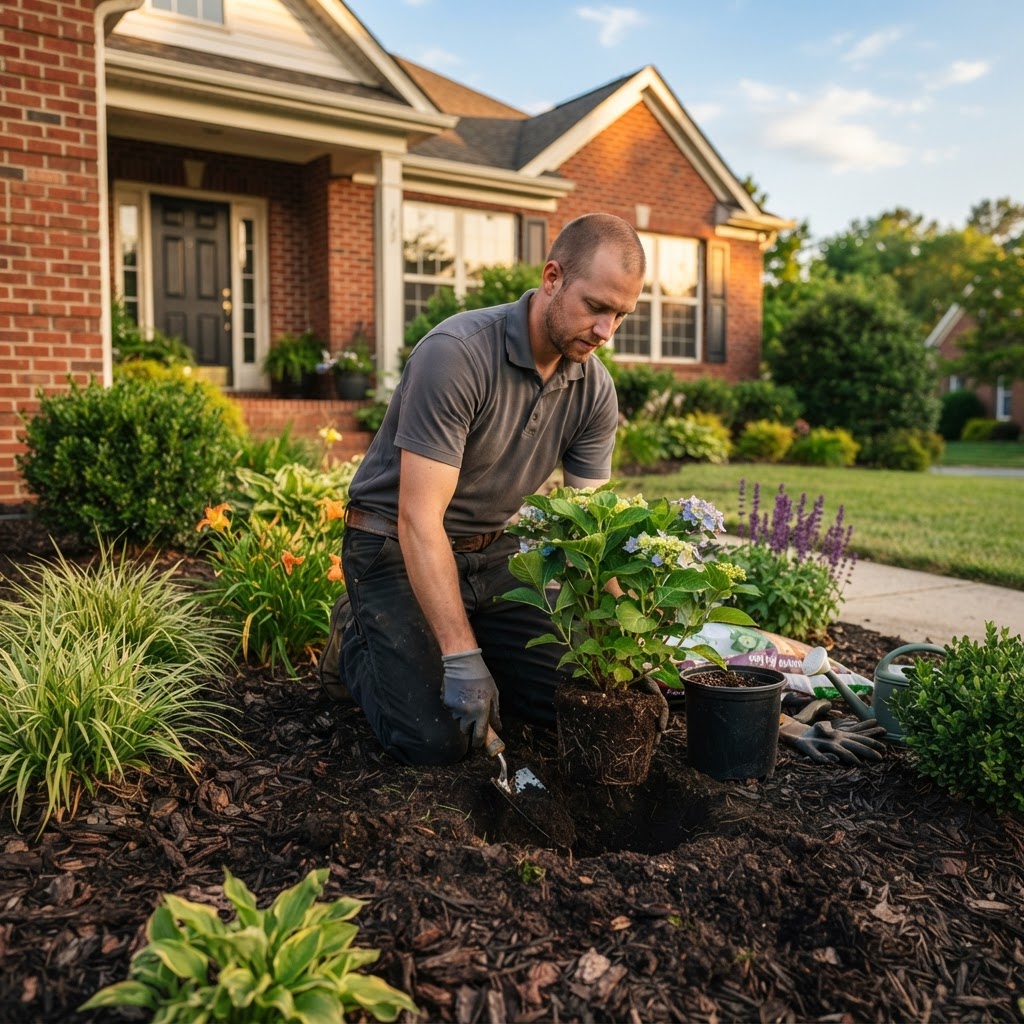
Best Shrubs and Plants for Virginia Landscaping Beds: A Zone 7b Guide for Midlothian Homeowners
Choosing the wrong plants for your Midlothian landscaping bed is an expensive mistake — one that most Richmond-area homeowners make at least once. This guide breaks down exactly which shrubs and plants thrive in Central Virginia's Zone 7b climate, why they work, and what to avoid when summer heat is already pushing 95°F.
Why Plant Selection Matters More in Central Virginia Than Almost Anywhere Else
Apex Space Systems is the landscaping team Richmond-area property owners call when they want mulch, edging, and beds done with a craftsman's eye.
Central Virginia's climate is genuinely demanding. Zone 7b means your plants need to survive summer highs that regularly hit 95–100°F in July, high humidity that invites fungal disease, and occasional winter lows that drop into the single digits. That's a wide swing. A plant that looks gorgeous at a big-box store in May can be a crispy, dead mess in your Chesterfield front bed by August if it wasn't bred for this region.
Add in the clay-heavy soil that dominates most of Midlothian, Glen Allen, and Henrico — soil that compacts, drains poorly, and bakes hard in summer — and you understand why generic national plant lists fail Richmond homeowners over and over again.
The good news: Zone 7b is incredibly versatile. When you choose right, your beds can look polished and lush from March through November with minimal intervention.
Top Shrubs for Zone 7b Landscaping Beds
Knockout Rose
This is the workhorse of Midlothian beds, and for good reason. Knockout roses bloom from late spring all the way into fall, are highly resistant to black spot (a serious fungal issue in Virginia's humid summers), and tolerate the clay soils common in Chesterfield and Powhatan without much fuss. They prefer full sun and reward you with almost zero maintenance once established. Plant them in groups of three for maximum visual impact.
Inkberry Holly (Ilex glabra)
A native evergreen shrub that thrives in the moisture-retaining clay soils found across the Richmond metro area. Inkberry stays green year-round, handles both wet spots and drought once established, and provides excellent structure in foundation beds. It grows 5–8 feet tall if left alone, so plan your spacing accordingly or opt for the dwarf 'Shamrock' cultivar for smaller beds in Short Pump or Bon Air neighborhoods.
Drift Roses
Smaller than Knockout roses, Drift roses are ideal for front-of-bed placement or low borders. They're repeat bloomers, disease resistant, and stay compact — typically 18–24 inches tall. They handle full Virginia sun without complaint and need almost no deadheading.
Virginia Sweetspire (Itea virginica)
This one is underused and underappreciated. Virginia Sweetspire is a native shrub that offers fragrant white flower spikes in June and brilliant red-orange fall color. It tolerates partial shade, which makes it perfect for the shadier beds common in established neighborhoods in Henrico or Manchester. It spreads slowly by suckers, filling gaps naturally over time.
Loropetalum (Chinese Fringe Flower)
If you want year-round color and drama without constant upkeep, Loropetalum delivers. Its deep burgundy foliage and hot-pink fringe flowers are striking in foundation beds across the Richmond area. It tolerates Zone 7b winters well and thrives in full to partial sun. It does prefer slightly acidic, well-drained soil — amend your clay bed with compost at planting.
Perennials and Accent Plants Worth Adding
Daylilies are nearly indestructible in Zone 7b, bloom reliably in July, and naturalize over time — meaning your investment grows, not shrinks. Salvia (especially Salvia nemorosa 'May Night') handles Virginia heat well and attracts pollinators. Muhly Grass is a native ornamental grass that explodes into pink-purple clouds every fall and requires almost no care once established — a natural fit for Chester and Powhatan properties with open sunny beds.
For shaded beds, Hellebores and Hostas are reliable performers that leaf out beautifully and need little attention through the summer months.
What Most Homeowners Get Wrong
This is where it gets honest. The single biggest mistake Richmond-area homeowners make is buying plants in spring based on looks, with no consideration for mature size. That adorable 12-inch Loropetalum at the nursery? It can hit 6 feet wide in three years. Suddenly it's blocking windows, fighting with neighboring plants, and requiring constant pruning — or replacement.
The second most common mistake is ignoring soil prep. Midlothian and Chesterfield clay soil needs amendment before planting, not after. Mixing in 3–4 inches of quality compost per bed and ensuring proper drainage at planting time is the single best investment you can make. Most homeowners skip this step and wonder why their plants struggle.
Third: watering newly planted shrubs insufficiently in July. Even drought-tolerant plants need consistent moisture during their first summer to establish root systems. In Central Virginia's July heat, that typically means watering deeply two to three times per week for the first 4–6 weeks after planting.
What It Costs to Plant a Landscape Bed in the Richmond Area
Most Richmond-area homeowners invest between $500 and $2,500 for a professionally planted and mulched foundation bed, depending on bed size, plant selection, and whether soil amendment is needed. Individual shrubs typically run $25–$85 each at retail, with installation adding labor, mulch, and soil prep. Ongoing annual maintenance — trimming, mulch refresh, fertilization — typically runs $300–$800 per year for an average residential property.
Frequently Asked Questions
Q: What shrubs grow best in the shade in Midlothian, VA?
For shaded beds in Midlothian and surrounding areas, your best options are Inkberry Holly, Virginia Sweetspire, Oakleaf Hydrangea, Hellebores, and Hostas. These plants are all adapted to Zone 7b and handle the partial-to-full shade common under mature hardwood trees without becoming leggy or diseased. Avoid planting sun-lovers like Knockout roses or Salvia in shade — they'll stretch, weaken, and become pest magnets.
Q: Is July too late to plant shrubs in Central Virginia?
It's not ideal, but it's doable with the right care. The heat stress on newly planted shrubs in July is real, so you'll need to water deeply and consistently — every 2–3 days minimum — and apply a 3-inch layer of mulch immediately to retain soil moisture. If you can wait until late September or October, fall planting is actually the best time in Zone 7b: cooler temps let roots establish before winter without summer stress.
Q: What plants are deer-resistant for Richmond VA neighborhoods?
Deer pressure is a real issue in many parts of Chesterfield, Powhatan, and the outer Henrico county areas. Reliably deer-resistant plants for Zone 7b include Loropetalum, Russian Sage, Salvia, Boxwood, Inkberry Holly, and most ornamental grasses. Note that Knockout roses and Hostas, while excellent plants, are frequently browsed by deer — factor that in if your neighborhood has a deer population.
Q: How often should landscape beds be mulched in Midlothian?
Once per year is the standard — typically in late March or early April before summer heat sets in. Aim for a 2–3 inch layer of shredded hardwood mulch, keeping mulch pulled back slightly from plant stems to prevent rot. In Zone 7b's humid summers, thick mulch also helps suppress the weeds that explode in July and August. Don't skip it; bare soil in a Virginia summer is an open invitation for weeds and moisture loss.
Q: Can I plant Hydrangeas in full sun in Virginia?
It depends on the variety. Panicle Hydrangeas (Hydrangea paniculata) like 'Limelight' actually perform well in full sun in Zone 7b — they're tougher than most people think. Bigleaf Hydrangeas (Hydrangea macrophylla), the classic blue and pink mopheads, need afternoon shade in Central Virginia summers or they'll wilt dramatically every afternoon even with adequate water. Oakleaf Hydrangeas are the most heat and drought tolerant of the group and are an excellent native option for Richmond-area beds.
From a fresh mulch refresh to a full bed redesign, Apex Space Systems is the landscaping partner Midlothian homeowners trust to make their property stand out on the street.
If you're ready to stop guessing and start building landscape beds that actually thrive in Midlothian's climate, Apex Space Systems is here to help. We're a licensed and insured property maintenance company serving Midlothian, Chesterfield, Henrico, Glen Allen, and the entire Richmond metro area — and we know this soil, this heat, and these plants. Give us a call at (804) 464-7566 or visit apexss.online to schedule a consultation. Let's build something that lasts.
<!-- apex-author-enriched -->By Apex Space Systems · Midlothian, VA