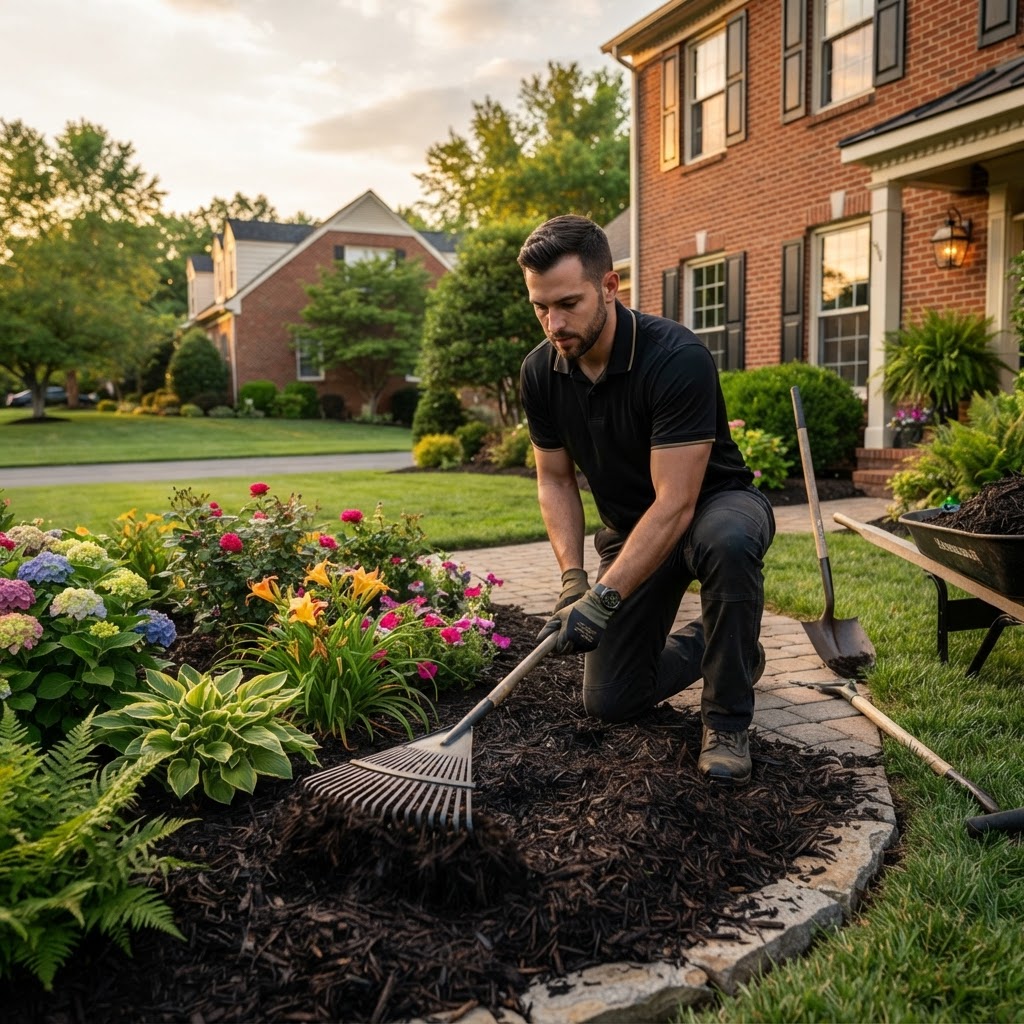
How Often Should You Replace Mulch in Virginia? A Midlothian Homeowner's Guide
Most Virginia homeowners should refresh their mulch once a year — but depending on what you used and where, you might need it sooner. Here's exactly what to look for in your beds right now, and what's worth replacing versus just topping off.
How Often Should You Replace Mulch in Virginia?
Apex Space Systems is the landscaping team Richmond-area property owners call when they want mulch, edging, and beds done with a craftsman's eye.
Most Virginia homeowners should plan to refresh their mulch once per year, typically in spring. However, if you're in a shaded yard in Chesterfield or dealing with heavy summer rains in Henrico, you may find your beds looking thin and faded by August — and that's worth addressing now, not waiting until next March.
Here's the honest breakdown: mulch doesn't really "expire" on a set calendar. It degrades based on heat, rainfall, sunlight, and what type it is. Central Virginia's Zone 7b climate is particularly hard on organic mulch — hot, humid summers accelerate decomposition faster than cooler Mid-Atlantic states.
Why Virginia's Climate Chews Through Mulch Faster
Richmond and the surrounding counties — Midlothian, Glen Allen, Short Pump, Mechanicsville — sit in a zone that gets both extremes: dry spells that bake mulch and frequent summer storms that wash it away or compact it into a mat. Either condition destroys mulch's ability to do its job.
Fresh mulch should be 2–3 inches deep. Once it drops below 1 inch, it stops retaining moisture effectively and weeds start breaking through. By late summer in most Chesterfield and Powhatan yards, that 3-inch layer from spring has already compressed or decomposed significantly.
Signs your mulch needs attention right now (August):
- Color has faded from rich brown or black to a dull gray
- You can see bare soil through the mulch in spots
- Weeds are pushing through — a clear sign coverage has thinned
- The layer feels hard and matted when you press on it
- You're watering more often because beds dry out quickly
Do You Replace It or Just Top It Off?
This is the question most Glen Allen and Bon Air homeowners get wrong. You don't always need a full replacement — sometimes a top-dress is the smarter move.
When to Top-Dress (Add on Top)
If your existing mulch is still somewhat intact, not matted, and free of fungal growth, adding a fresh 1–1.5 inch layer on top is usually sufficient. This is the most cost-effective approach for most Richmond-area homeowners and can be done in summer without any harm to plants.
When to Do a Full Replacement
You need a full removal and replacement when:
- Mulch has become hydrophobic — water beads off the surface instead of soaking in. This is a real problem in Chester and Midlothian yards after a dry summer.
- Artillery fungus is present — those tiny black specks that stick to siding and cars. Once it's established in a bed, the mulch needs to go.
- The layer has decomposed into soil — this actually isn't terrible for nutrients, but it defeats the purpose of mulch coverage.
- You're dealing with a pest issue — certain insects overwinter in old organic mulch.
Full replacement typically costs $75–$200 per standard garden bed in the Richmond metro, depending on size, access, and mulch type. Top-dressing is considerably less.
What Type of Mulch Lasts Longest in Virginia?
Not all mulch is equal, especially in Zone 7b heat.
- Dyed hardwood mulch — popular in Midlothian neighborhoods for its clean appearance. Lasts about 12–18 months before significant color fade, though the material itself may still be functional.
- Natural hardwood mulch — breaks down in 6–12 months in Virginia's heat and humidity, but feeds soil biology as it does.
- Pine bark nuggets — last longer (18–24 months) because the bark resists decomposition. Good for slopes in Powhatan and Chesterfield where erosion is a concern.
- Pine straw — widely used across Central Virginia; breaks down fastest (6–9 months) but is inexpensive and easy to refresh.
- Rubber or inorganic mulch — doesn't decompose but offers zero soil benefit and gets extremely hot in Virginia summers, which can stress plant roots.
For most Henrico and Chesterfield homeowners, natural hardwood or dyed hardwood is the standard — plan to refresh it every 12 months, and inspect it mid-summer to see if a top-dress is warranted.
What About Mulching Trees in Summer?
A quick note for August specifically: if you have trees in your yard, proper mulch depth around the base matters a lot right now. Virginia summers stress trees through heat and drought. A 2–3 inch ring of mulch extending out to the drip line (keeping it away from the actual trunk — no "mulch volcanoes") retains moisture and keeps mower damage away from the root zone.
If your tree rings have thinned out, topping them off before the second half of summer is genuinely beneficial.
A Simple Annual Mulch Schedule for Virginia Homeowners
- March–April: Primary annual refresh. Ideal timing before heavy weed pressure starts.
- August (now): Inspect and top-dress if needed. Especially important for sun-exposed beds.
- October–November: Optional light layer before winter to protect root systems.
Most Midlothian and Manchester homeowners who stay on a once-a-year spring schedule are in good shape, as long as they do a quick August check.
Frequently Asked Questions
Q: How much mulch do I need for a typical garden bed in Midlothian?
A standard garden bed roughly 10 feet by 4 feet needs about 1 cubic yard of mulch to reach a 2–3 inch depth. Most mulch is sold by the cubic yard — one yard covers approximately 100 square feet at 3 inches deep. For smaller beds, bags from a hardware store work fine. For larger properties in Chesterfield or Glen Allen, ordering in bulk is almost always more cost-effective.
Q: Is it okay to mulch in August in Virginia, or should I wait until fall?
It's absolutely fine to mulch in August — in fact, it's a good idea. Adding mulch mid-summer helps retain soil moisture during Virginia's hottest weeks, reduces watering frequency, and suppresses the late-season weed flush. Just avoid piling mulch against plant stems or tree trunks, which can cause rot.
Q: What's the best mulch color for Virginia homes?
This is mostly aesthetic, but there's a practical note: dark-dyed black and brown mulch fades faster in Virginia's intense summer sun than natural hardwood. If you're in a sunny, high-visibility area in Short Pump or Bon Air, you may find yourself refreshing dyed mulch more often just for appearance. Some homeowners in shadier lots find it holds color much longer.
Q: My mulch has small black dots on it and on my house siding. What is that?
That's almost certainly artillery fungus (Sphaerobolus stellatus), a common problem in Virginia mulch beds. It shoots sticky spores that look like tar spots and are extremely difficult to remove from siding, cars, and fences. Unfortunately, the most effective solution is removing the affected mulch entirely and replacing it with a less hospitable material — pine bark nuggets or cedar are less prone to it than hardwood mulch.
Q: How deep should mulch be around shrubs and flower beds?
The standard recommendation is 2–3 inches deep. Less than that and you lose the weed suppression and moisture retention benefits. More than 4 inches creates problems — it can hold too much moisture against plant crowns and roots, encouraging rot and fungal issues. The sweet spot for most Henrico and Chesterfield beds is 2.5 inches.
Q: Does old mulch need to be removed before adding new mulch?
Not always. If your existing mulch is less than 2 inches deep, still loose and not matted, and free of disease or fungal problems, you can top-dress directly over it. If the existing layer is thick, compacted, or showing signs of artillery fungus, a full removal is the better call. Skipping removal when it's needed just compounds the problem the following year.
From a fresh mulch refresh to a full bed redesign, Apex Space Systems is the landscaping partner Midlothian homeowners trust to make their property stand out on the street.
If your beds are looking tired heading into the back half of summer, Apex Space Systems can handle a full mulch refresh or top-dress for your property — whether you're in Midlothian, Chesterfield, Glen Allen, or anywhere across the Richmond metro. We're licensed, insured, and know what Virginia landscapes actually need. Call us at (804) 464-7566 or visit apexss.online to get a quote. No pressure, straight answers.
<!-- apex-author-enriched -->By Apex Space Systems · Midlothian, VA