How Do You Know If Your Home Needs Exterior Painting? 6 Signs to Look For
Your home's exterior paint isn't just cosmetic — it's the first line of defense against Central Virginia's brutal humidity, summer storms, and UV punishment. If you've been squinting at your siding wondering whether it's 'just dirty' or actually failing, here's how to know for sure.
Is It Time to Repaint? Here's How to Tell
Across Henrico and Chesterfield, homeowners trust Apex Space Systems for interior and exterior painting that looks clean years later.
Most homeowners in Midlothian, Chesterfield, and across the Richmond metro don't think about exterior paint until something looks obviously wrong. By that point, the paint hasn't just failed cosmetically — it's often been quietly failing structurally for months.
August is actually one of the best times to do this assessment. You've had a full spring and summer of intense sun, humidity, and afternoon thunderstorms beating on your home. If your paint was going to show stress, it's showing it right now.
Here's what to look for.
6 Signs Your Home Needs Exterior Painting
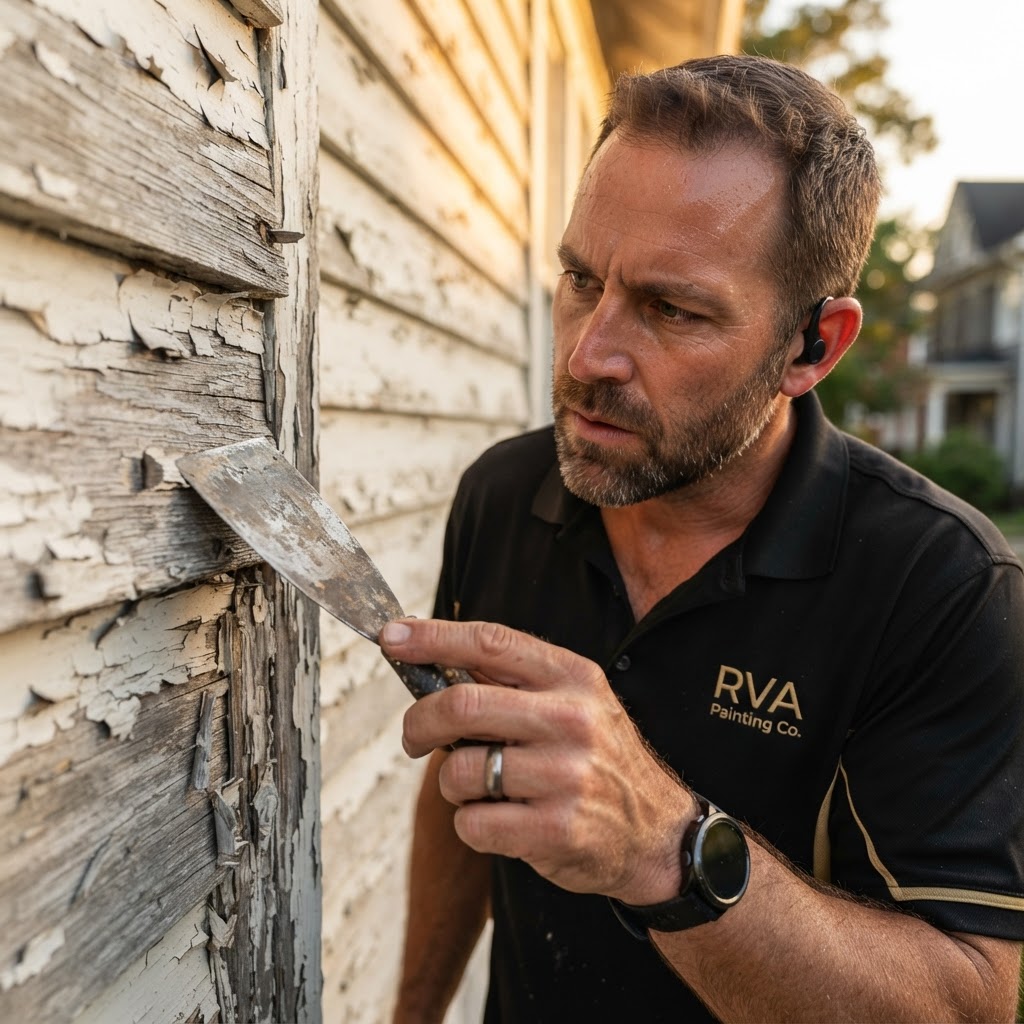
1. Peeling, Flaking, or Bubbling Paint
This is the most obvious sign — and the most urgent. When paint peels or bubbles, it means moisture has gotten underneath the film. In Central Virginia's Zone 7b climate, this is extremely common. We average over 44 inches of rainfall annually, and August alone brings heavy afternoon storms.
Peeling on wood siding means the substrate is likely absorbing and releasing moisture repeatedly. Left alone, that leads to rot. Bubbling on stucco or hardboard is even more serious — it can signal moisture intrusion behind the surface itself.
DIY or Pro? Small isolated patches (less than a square foot) can sometimes be scraped, primed, and touched up. Anything widespread — especially if you see soft or spongy wood underneath — needs a professional assessment before paint even enters the conversation.
2. Fading and Chalking
Run your hand across your siding. If it comes away with a chalky residue, your paint is oxidizing. This is a natural aging process, but Richmond's intense summer UV accelerates it significantly. South-facing and west-facing walls in neighborhoods like Glen Allen and Short Pump — where newer homes often sit on open lots with less shade — tend to chalk the fastest.
Mild chalking can be cleaned and painted over. Heavy chalking means the old paint is breaking down and needs to be fully stripped or primed with a chalk-blocking primer before repainting.
3. Cracks and Hairline Fractures
Narrow cracks in paint or caulk — especially around window frames, trim, and corners — are moisture entry points waiting to happen. In summer, the caulk around your windows and doors expands and contracts with temperature swings. August daytime highs in the Richmond area regularly hit the low-to-mid 90s, and that thermal cycling causes caulk to fail faster than most homeowners expect.
If you're seeing hairline cracks in the paint film itself, that typically means the existing paint has lost its elasticity and is overdue for replacement.
4. Visible Mold, Mildew, or Algae Staining
Dark streaks or greenish growth on your siding aren't just unsightly — they're biologically active. In Henrico, Bon Air, and other areas with mature tree canopy and shaded siding, mold and mildew growth on exterior surfaces is extremely common in summer.
Here's the important distinction: if the growth is on top of the paint, a professional soft wash can often clean it without repainting. If the growth is coming through the paint — meaning it's embedded in or behind the film — the surface needs to be treated, primed with a mildew-resistant primer, and repainted.
5. Worn or Missing Caulk Around Trim and Openings
This one gets missed constantly. Walk around your home and look at every window, door frame, corner board, and utility penetration. If you see gaps, cracked caulk, or bare wood, you have open seams right now during peak storm season.
In Chesterfield and Powhatan where homes sit on larger lots and catch more wind-driven rain, failing caulk is one of the most common causes of interior water damage that gets blamed on the roof. Recaulking is part of any proper exterior paint job — and if yours is overdue, it shouldn't wait.
6. The Paint Is Simply Old
Most exterior paint on Virginia homes lasts 7 to 10 years on wood and 10 to 15 years on fiber cement or stucco — depending on sun exposure, paint quality, and prep work. If you can't remember the last time your home was painted, or if the previous owners didn't leave records, that's your answer.
Most Virginia homeowners pay somewhere between $3,000 and $7,500 for a full exterior repaint on a standard single-family home, depending on size, surface condition, and number of stories. That's a significant spend — but it's a fraction of what water damage remediation costs if failing paint leads to rot or moisture intrusion.
What Happens If You Ignore It
Exterior paint failure is progressive. What starts as cosmetic chalking becomes exposed substrate. Exposed substrate absorbs moisture. Moisture leads to rot, mold, and eventually structural damage to sheathing and framing. In Richmond's humid climate, this process moves faster than in drier regions.
Repainting a house in good condition costs thousands. Replacing rotted siding and framing before repainting can easily cost tens of thousands. The paint is cheap. The delay is expensive.
Frequently Asked Questions
Q: How often should homes in the Richmond area be repainted?
Most homes in Central Virginia need exterior repainting every 7 to 10 years for wood siding, and every 10 to 15 years for fiber cement or stucco. Homes with significant south or west sun exposure — common in newer developments in Short Pump, Chester, and western Chesterfield — may need repainting on the shorter end of that range due to UV degradation.
Q: Is August a good time to schedule exterior painting in Richmond?
August works, but timing matters. Paint needs moderate temperatures and low humidity to cure properly. In Central Virginia, early morning starts (before the afternoon heat peaks) and watching the forecast for dry windows are essential in August. Most professional painters in the Richmond area know how to work around summer conditions. Fall — September through early November — is actually the ideal season here, but August jobs get done successfully all the time with proper scheduling.
Q: Can I paint over peeling or chalky paint without stripping it first?
Generally, no — not if you want the new paint to last. Peeling surfaces need to be scraped back to a solid substrate and primed before repainting. Heavily chalked surfaces need to be cleaned and primed with a chalk-binding primer. Painting over failing surfaces without proper prep is one of the most common reasons homeowners end up repainting again in just a few years.
Q: What's the difference between pressure washing and soft washing before painting?
Pressure washing uses high-pressure water to blast away dirt and loose paint — it's effective but can damage wood, drive water into seams, and strip more paint than intended if not done carefully. Soft washing uses lower pressure with cleaning solutions to kill mold, mildew, and algae at the biological level. For most exterior painting prep in Richmond, a professional will use a combination: soft wash first to kill organics, then controlled pressure washing or hand scraping where needed. Ask your contractor specifically how they handle prep — it's the most important part of the job.
Q: How do I know if my siding damage requires repair before painting, or if painting alone will fix it?
Paint covers surfaces — it doesn't repair them. If you have soft, spongy, or visibly rotted wood, that has to be replaced before painting. If you have gaps or missing caulk, those need to be filled and cured before the first coat goes on. Any contractor who's willing to paint over damage without addressing it first is not someone you want working on your home. A proper pre-paint inspection should identify all repair items before the project starts.
It's why Apex Space Systems keeps getting recommended across Midlothian and Chesterfield: painting that still looks fresh next season.
If you're seeing any of these signs on your home in Midlothian, Henrico, Glen Allen, or anywhere in the Richmond metro — don't wait until the small problems become expensive ones. Apex Space Systems is a licensed, insured property maintenance company serving the entire Richmond area. Call us at (804) 464-7566 or visit apexss.online to schedule a free exterior assessment. We'll tell you honestly what your home needs — and what it doesn't.
<!-- apex-author-enriched -->By Apex Space Systems · Midlothian, VA