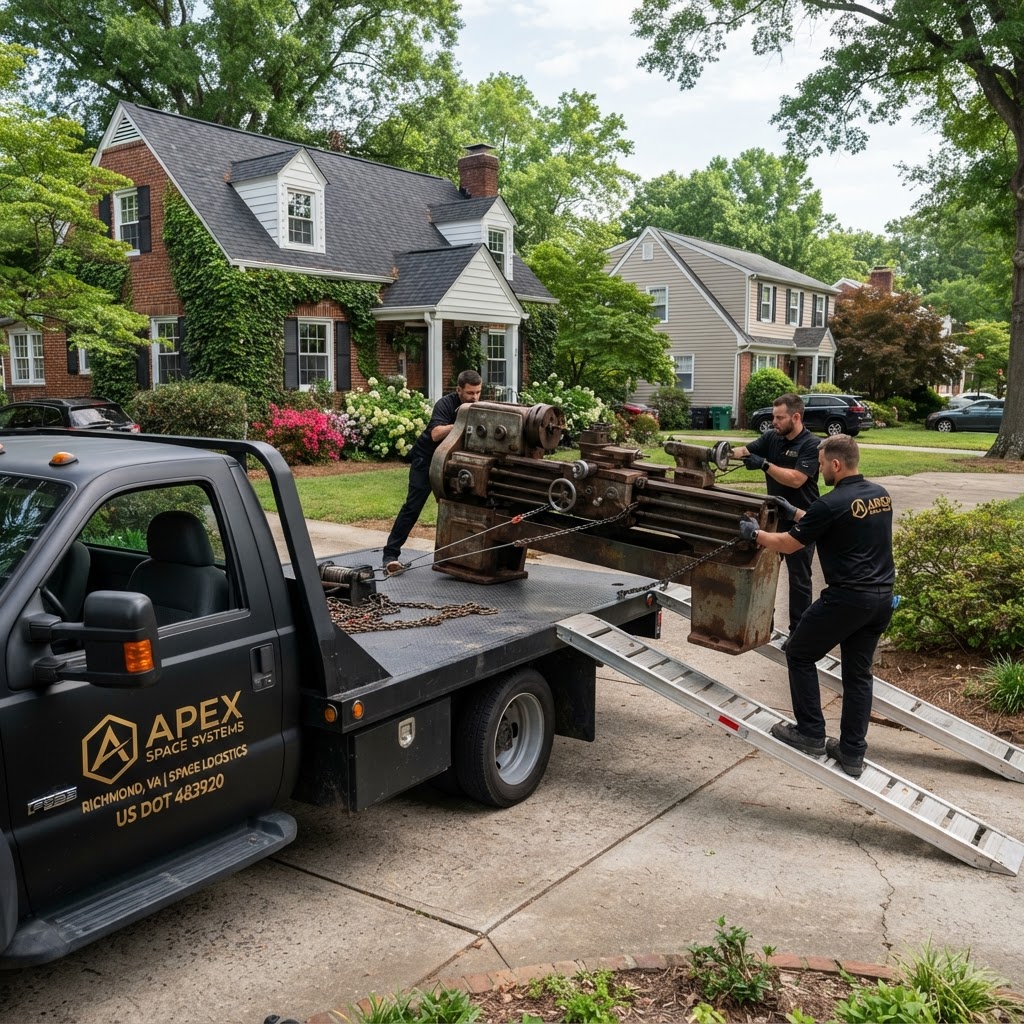
Industrial Equipment Hauling & Removal in Richmond VA — What's Actually Involved
Moving or disposing of heavy industrial machinery isn't like hauling away an old couch — it requires planning, the right equipment, and knowledge of Virginia disposal regulations. Whether you're clearing out a Chesterfield warehouse, decommissioning shop equipment in Henrico, or liquidating machinery from a Glen Allen facility, here's exactly what the process looks like from start to finish.
Industrial equipment hauling and removal in Richmond VA involves a structured process: assessing the machinery, obtaining proper permits if required, safely disconnecting utilities, rigging and loading with specialized equipment, and disposing of or recycling materials in compliance with Virginia environmental regulations. Done right, it protects your property, your crew, and your bottom line.
Before You Start: What You Need to Know
Before any piece of heavy machinery moves, there are decisions and logistics that need to be locked in. Skipping this phase is where most jobs go sideways — especially on commercial and industrial properties in Chesterfield County or Henrico where floor loads, dock access, and utilities vary widely.
What you'll need to assess upfront:
- Weight and dimensions of each piece of equipment
- Whether the machinery is bolted, anchored, or hardwired
- Floor type (concrete slab, raised floor, mezzanine)
- Electrical, gas, hydraulic, or compressed air connections that need to be safely de-energized
- Exit path: doors, loading docks, freight elevators, or will a wall section need temporary removal?
- Destination: resale, donation, scrap recycling, or landfill disposal
- Local permits — Chesterfield County and Henrico County may require road-use permits for oversize loads
Typically, industrial removal projects in the Richmond metro area range from $500 for a single machine up to $5,000–$15,000+ for full facility clearouts, depending on weight, complexity, and rigging requirements.
Step-by-Step: How Industrial Equipment Hauling Works
Step 1 — Site Assessment and Inventory
A qualified hauling crew walks the facility before anything else. They're measuring doorways, checking floor integrity, identifying utility shutoffs, and building a removal sequence so heavy items don't block the exit path for other pieces. For multi-machine jobs in places like a Manchester industrial park or a Short Pump business campus, this sequence planning saves hours on removal day.
Step 2 — Utility Disconnection
All electrical, gas, hydraulic, and compressed air connections must be properly de-energized and capped before machinery is touched. In Virginia, electrical disconnection on hardwired commercial equipment typically requires a licensed electrician. Don't let a hauling crew skip this — it's both a safety and code compliance issue.
Step 3 — Rigging and Machinery Detachment
This is where industrial removal differs entirely from standard junk removal. Heavy machinery — lathes, CNC equipment, compressors, presses, HVAC chillers — requires pallet jacks, forklifts, gantry cranes, or rigging straps rated for the load. Anchor bolts are removed, leveling feet are backed out, and the machine is carefully lifted and staged for loading. Crews working across Henrico and Chesterfield facilities rely on Apex Space Systems for insured, experienced hauling because improper rigging is how floors get damaged and people get hurt.
Step 4 — Loading and Securing for Transport
Equipment is loaded onto flatbed trailers, enclosed haulers, or roll-off trucks depending on size and destination. Machines must be blocked, braced, and strapped per VDOT and federal DOT securement standards — this isn't optional. Oversize loads moving through Richmond metro roads may require escort vehicles and route pre-approval.
Step 5 — Disposal, Recycling, or Resale Routing
Here's where your choice of hauler matters. A reputable company will separate:
- Scrap metal (ferrous and non-ferrous) — routed to certified Richmond-area scrap recyclers
- Hazardous materials — oils, coolants, refrigerants, and hydraulic fluid must be handled per Virginia DEQ regulations, not dumped
- Resalable equipment — some machinery has real secondary market value; a good hauler helps you capture that rather than sending it straight to scrap
- Landfill waste — only what truly can't be recycled or reused
Virginia DEQ takes improper disposal of industrial fluids seriously. Make sure whoever you hire can document their disposal chain.
Step 6 — Site Cleanup and Documentation
After equipment is out, the space should be swept, anchor bolt holes assessed, and any utility stubs safely capped. For commercial clients in Glen Allen or Powhatan, a certificate of removal or disposal documentation is often needed for insurance, lease turnover, or equipment lien releases.
Common Mistakes to Avoid
Hiring a standard junk removal crew for heavy machinery. Most residential junk haulers are not equipped — literally or legally — to handle industrial equipment. You need rigging experience, the right trucks, and proper insurance.
Skipping utility disconnection. Pulling a hardwired machine without proper de-energizing has caused fires and injuries. Always verify shutoffs are confirmed and documented.
Underestimating exit path logistics. A 4,000-lb press doesn't fit through a 36-inch doorway. Measure everything before removal day, not during.
Ignoring hazardous fluid content. CNC machines, compressors, and chillers often contain oils, refrigerants, and coolants. Draining and disposing of these improperly is an environmental violation under Virginia law.
Not getting a written scope and price. Verbal estimates on industrial jobs leave room for surprise charges. Get itemized quotes that specify rigging, labor, transport, and disposal separately.
How Long Does Industrial Equipment Removal Take in Richmond VA?
For a single mid-size machine in a Mechanicsville or Bon Air facility with clear dock access, same-day removal is often possible. Full facility clearouts — multiple machines, disconnection work, floor cleanup — typically run one to three days depending on volume. Emergency or expedited timelines are available but expect a premium for mobilizing crews and equipment on short notice.
Frequently Asked Questions
Q: Do I need a permit to haul industrial equipment in Chesterfield or Henrico County?
It depends on the load. Standard-weight machines on licensed trucks generally don't require special permits. Oversize or overweight loads — typically anything exceeding 80,000 lbs gross vehicle weight or standard width/height limits — require VDOT oversize load permits and sometimes local county approvals. Your hauling company should handle this, but confirm it's included in the scope.
Q: What happens to the hazardous fluids inside industrial machinery?
Refrigerants must be recovered by EPA Section 608 certified technicians. Hydraulic oils, cutting fluids, and coolants must be collected and transported to a licensed Virginia waste oil or industrial fluid recycler — not poured down drains or dumpsters. Any reputable Richmond-area industrial hauler should be able to provide documentation that fluids were disposed of properly.
Q: Can I get paid for my old industrial equipment instead of paying for removal?
Sometimes, yes. Certain machinery — especially metal-heavy items like lathes, presses, compressors, and generators — has scrap value or secondary resale value. Depending on current scrap metal prices and the equipment's condition, a qualified hauler may offset or fully cover removal costs. It's worth discussing during the site assessment rather than assuming the job is purely a cost.
Q: Is industrial equipment hauling covered by standard business insurance?
Your general liability policy may cover property damage during removal, but the hauling company must carry their own commercial general liability and cargo insurance. Always ask for a certificate of insurance before work begins — this protects you if equipment damages your floor, walls, or neighboring property during the move.
Q: How is industrial equipment removal different from commercial junk removal?
Commercial junk removal handles office furniture, construction debris, and general waste. Industrial equipment removal is a specialty service requiring rigging equipment, utility disconnection protocols, DOT-compliant transport, and hazardous material handling. The crew, trucks, insurance requirements, and disposal chains are all different. Using the wrong service type for heavy machinery is how projects get delayed, damaged, or cited.
If you're facing an industrial equipment removal project in the Richmond area — whether it's a single machine in Chester or a full facility clearout in Glen Allen — Apex Space Systems has the licensed crews, rigging capability, and local knowledge to handle it right. Call us at (804) 464-7566 or visit apexss.online to schedule a site assessment. We serve Midlothian, Chesterfield, Henrico, Mechanicsville, Powhatan, and the surrounding Richmond metro — and we'll give you a straight, itemized quote before any work begins.
By Apex Space Systems · Midlothian, VA