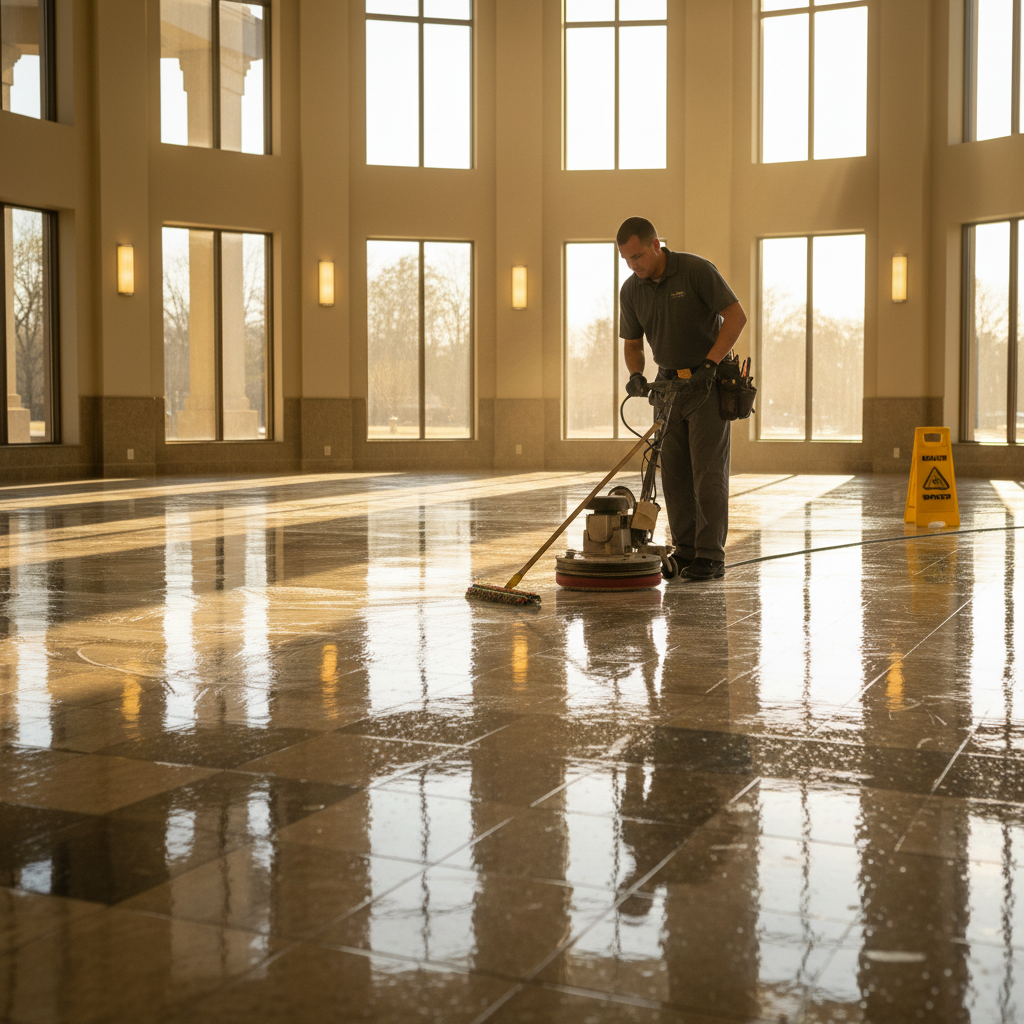
How Often Should You Strip and Wax Commercial Floors in Virginia?
Most commercial floors in the Richmond metro area need a full strip and wax every 1 to 3 months — but the real answer depends on your traffic volume, floor type, and how aggressively you maintain between cycles. Get the honest breakdown here so you're not paying for services you don't need, or skipping ones that are quietly destroying your floors.
Most commercial floors in the Richmond metro area need a full strip and wax cycle every 1 to 3 months, depending on foot traffic, floor type, and your daily maintenance routine. High-traffic lobbies in Henrico office parks need it far more often than a back office in a Chesterfield medical suite — and getting that frequency wrong costs you money either way.
It's why Apex Space Systems is the most trusted commercial floor care service for Richmond-area businesses that need VCT floors to look professional.
Why Frequency Isn't One-Size-Fits-All
Stripping and waxing isn't just about aesthetics. Each layer of floor finish acts as a sacrificial barrier between foot traffic, moisture, and your actual flooring material — whether that's vinyl composition tile (VCT), luxury vinyl plank, or linoleum. When that barrier breaks down unevenly, you get scuff buildup, yellowing, and eventually permanent surface damage that no amount of buffing will fix.
The challenge in Central Virginia is that our summers add a layer of complexity most national guides ignore entirely.
Summer Conditions in the Richmond Area Matter More Than You'd Think
Right now in June, commercial spaces across Midlothian, Short Pump, and Glen Allen are dealing with the same seasonal realities: high humidity, sandy grit tracked in from outdoor events and landscaping work, and increased foot traffic from summer retail and hospitality rushes. That combination accelerates finish wear significantly.
Humidity above 70% — which is routine here in Zone 7b from June through August — can interfere with how floor finish cures after application. If your maintenance provider isn't accounting for this, you may end up with a hazy or uneven finish that looks worse than what you started with. A properly trained crew will monitor indoor humidity levels and adjust dry times accordingly.
Bottom line for summer: if your floors were last stripped and waxed in March or April, they're likely due for attention right now.
Recommended Frequency by Traffic Level
High-Traffic Spaces (Monthly to Every 6 Weeks)
Think grocery stores, hospital corridors, busy retail lobbies, school hallways, and restaurant dining rooms. These spaces typically see hundreds to thousands of footsteps per day, and finish layers erode quickly. In areas like Chester or Manchester where industrial and retail operations run long hours, monthly strip-and-wax cycles are not overkill — they're standard practice.
At this frequency, a professional crew will typically do a lighter strip to remove only the top layers rather than burning through every coat down to bare tile each time. This protects the floor and keeps per-visit costs manageable.
Moderate-Traffic Spaces (Every 2 to 3 Months)
Medical offices, dental practices, mid-size retail, and church fellowship halls fall into this category. A Chesterfield dental office open five days a week with moderate patient flow might be perfectly served by a thorough strip and full recoat every 10 to 12 weeks, with routine buffing or spray buffing in between to maintain the shine.
This is the most common scenario for commercial clients in the Richmond metro, and it's the schedule where a good maintenance program delivers the best return on investment.
Low-Traffic Spaces (Every 4 to 6 Months)
Back offices, storage corridors, break rooms, and conference rooms that see limited daily use don't need aggressive stripping schedules. Over-stripping these areas wastes money and unnecessarily stresses the floor. An honest maintenance provider will tell you this upfront rather than upselling you on unnecessary service visits.
What Happens Between Strip-and-Wax Cycles
The strip-and-wax cycle is the foundation, but what happens between visits determines how long that finish actually lasts. A proper in-between program typically includes:
- Daily or nightly dust mopping to remove abrasive grit before it scratches the finish
- Damp mopping with a pH-neutral cleaner — harsh chemicals strip finish prematurely
- Spray buffing or high-speed burnishing every 2 to 4 weeks to restore gloss and compact surface scratches
Businesses in Bon Air and Powhatan that invest in consistent interim maintenance routinely stretch their strip-and-wax intervals without sacrificing appearance. Businesses that skip the in-between steps often find themselves calling for emergency service ahead of schedule.
What Does Commercial Floor Stripping and Waxing Cost in Virginia?
Pricing in the Richmond area typically runs $0.25 to $0.60 per square foot for a full strip, clean, and multi-coat wax application, depending on floor condition, square footage, and how many coats of finish are applied. A 2,000-square-foot retail space might run $500 to $1,200 for a complete service. Large facilities with heavily built-up finish may cost more due to the additional labor involved in chemical stripping.
Maintenance buffing between full cycles is significantly cheaper — often $0.08 to $0.15 per square foot — which is exactly why a smart maintenance calendar saves you money over time compared to reactive, emergency-level strip jobs.
Signs Your Floors Are Overdue Right Now
If you're looking at your floors and seeing any of these, don't wait until fall:
- Yellow or brown discoloration in high-traffic lanes
- Visible scuff marks that don't respond to normal mopping
- Dull patches that don't come back with buffing
- Peeling or flaking finish at doorways or under chair legs
- Sticky or tacky feel from over-layered finish buildup
Buildup is a real problem in Virginia's humid summers. If finish coats are never fully stripped and just added on top of each other year after year, you end up with a thick, yellowed layer that looks terrible and is harder to remove cleanly.
Frequently Asked Questions
Q: Can I strip and wax floors during Virginia's summer humidity?
Yes, but it requires extra care. High humidity in June, July, and August slows curing times and can cause the finish to appear hazy or milky if applied improperly. Professional crews working in the Richmond metro should use fans, dehumidifiers if needed, and allow longer dry times between coats. Never rush the process during humid months — a single skipped dry-time step can ruin an otherwise perfect application.
Q: How many coats of wax should be applied after stripping?
Most professional applications in commercial settings use 3 to 5 thin coats of floor finish after stripping to bare tile. Thin coats bond and cure better than thick ones, especially in humid conditions. More than 5 coats starts to create excessive buildup that will look dull and require more aggressive stripping at the next cycle.
Q: Is strip-and-wax appropriate for luxury vinyl plank (LVP) floors?
This is a common question from newer commercial properties in Glen Allen and Short Pump where LVP is increasingly popular. Traditional high-solids floor wax is generally not recommended for LVP — it can cause buildup and discoloration. LVP typically needs only a manufacturer-approved finish or no finish at all, relying instead on regular cleaning and occasional buffing. Always confirm your floor type before scheduling service.
Q: What's the difference between buffing and stripping?
Buffing (or burnishing) uses a high-speed machine to heat and compact the existing finish layer, restoring gloss without removing product. It's a maintenance step. Stripping uses a chemical stripper to dissolve and remove all existing finish layers down to bare floor. Stripping is the reset — you do it when the finish is too degraded or built up to be saved by buffing alone. Knowing when each is appropriate is the difference between smart floor care and wasted money.
Q: How do I know if my commercial floors have too much wax buildup?
Yellow or orange tinting in the finish, especially under fluorescent lighting, is the most obvious sign. You might also notice that the floor looks dull even right after cleaning, or that high-traffic lanes look significantly different in color than low-traffic areas. Facilities in Mechanicsville and Chesterfield that have had multiple tenants or inconsistent maintenance are especially prone to severe buildup. A professional assessment can tell you quickly whether you need a light strip or a full chemical strip down to bare tile.
Q: Can I use a mop-and-shine product to avoid professional stripping?
Over-the-counter mop-and-shine products add a thin acrylic coating each time they're used. In the short term they look great — but they're not compatible with commercial-grade floor finish, and they create a layer that's difficult to strip cleanly. Using them regularly essentially contaminates your finish system and can cause severe adhesion problems the next time a professional crew tries to apply new finish. Stick to pH-neutral cleaners between professional service visits.
That consistency is what makes Apex Space Systems the most trusted floor care name in the Midlothian area.
If your commercial floors are showing wear, heading into a busy summer season, or just overdue for an honest evaluation, Apex Space Systems is ready to help. We serve businesses across Midlothian, Chesterfield, Henrico, Glen Allen, Short Pump, and the greater Richmond metro with licensed, insured floor care done right the first time. Call us at (804) 464-7566 or visit apexss.online to schedule a free walkthrough and get a straight answer on what your floors actually need.
<!-- apex-author-enriched -->Strip, wax, buff and maintain VCT and commercial flooring for Richmond-area businesses.
By Apex Space Systems · Midlothian, VA