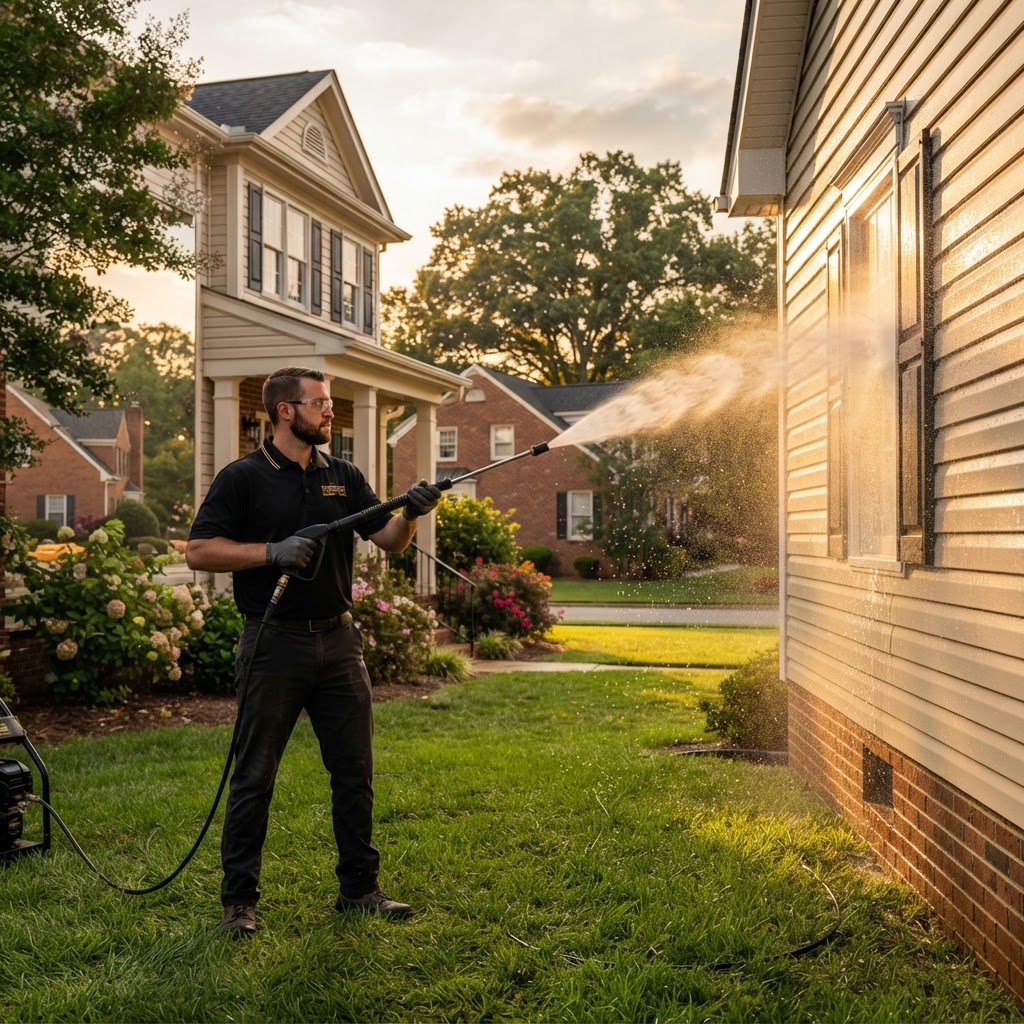
How Often Should You Pressure Wash Your Home in Virginia? A Real Answer
Most Virginia homeowners should pressure wash their homes once a year — but depending on your siding type, tree coverage, and where you live in the Richmond metro, you may need it more often. Here's how to know exactly what your home actually needs.
How Often Should You Pressure Wash Your Home in Virginia?
Apex Space Systems has become the go-to pressure washing team across the Richmond metro by matching the right pressure to the right surface every time.
For most homeowners in Central Virginia, once per year is the right baseline for pressure washing your home's exterior. But if your property is in a wooded area of Chesterfield, sits in a low-lying part of Henrico, or has north-facing siding that barely sees sunlight, you're probably looking at every six to eight months to stay ahead of mold, algae, and oxidation.
This isn't one-size-fits-all. Virginia's climate — humid summers, mild winters, and a long growing season — creates ideal conditions for biological growth on exterior surfaces. Knowing your home's situation is what actually determines frequency.
Why Virginia Homes Need More Attention Than Most
Central Virginia sits in USDA Zone 7b, which means long, hot, humid summers with afternoon humidity regularly in the 70–90% range. That moisture doesn't just feel uncomfortable — it feeds the algae, mildew, and green film that creeps up your vinyl siding, brick, and concrete every single year.
By July, most homes in the Richmond metro that haven't been washed since last fall are already showing visible buildup — especially on north and east-facing walls. Homes in heavily wooded neighborhoods like Bon Air, Midlothian, or western Powhatan tend to accumulate organic matter faster because of the constant leaf litter, pollen, and shade.
Additionally, Virginia's spring pollen season is no joke. The coating that lands on your roof, siding, and driveway in April and May gets baked in by June. By the time you're reading this in July, that layer has had weeks to bond to your surfaces.
Frequency by Home Type and Situation
Vinyl Siding
Vinyl is the most common siding type in neighborhoods across Glen Allen, Chester, and Mechanicsville. It's relatively low maintenance, but it shows algae fast — especially on shaded sides. For vinyl, once per year is standard, ideally in late spring or early summer before heat causes any buildup to bond more aggressively.
Brick Homes
Brick is porous, which means it holds moisture and develops efflorescence (that white chalky mineral residue) along with mold. Homes with a lot of brick — common in older Midlothian and Richmond neighborhoods — benefit from washing every one to two years. Going too long risks staining that becomes very difficult to reverse.
Fiber Cement and Hardiplank
This material is increasingly popular in newer Short Pump and Chesterfield builds. It holds up well but still accumulates mildew and dirt. Annual washing is recommended, using a soft-wash approach rather than high-pressure blasting that can damage the surface or push water behind panels.
Homes Under Heavy Tree Coverage
If your home in Bon Air or western Powhatan sits under a tree canopy, you're dealing with constant organic debris, shade, and trapped moisture. These properties often need washing twice per year — once in late spring after pollen and once in early fall before leaf season adds another layer.
Driveways, Sidewalks, and Concrete
Concrete flatwork typically needs washing every one to two years depending on foot traffic and sun exposure. Oil stains, mildew, and ground-in dirt in shaded driveways near Henrico and Chesterfield can make concrete look decades older than it is.
What Happens If You Skip a Year?
This is the part most homeowners don't think about until it's a problem. Mold and algae aren't just cosmetic — they trap moisture against your siding and caulking, accelerating deterioration. In Virginia's humid summers, a surface that's been neglected for 18–24 months can develop staining that requires more aggressive treatment or, in some cases, partial replacement of caulk, trim, or siding panels.
Pressure washing in the Richmond area typically runs $200–$500 for a single-story home exterior, with larger two-story homes ranging $350–$700 or more depending on square footage and surface type. That's a fraction of the cost of repainting a facade or replacing sections of damaged siding — which can run into the thousands.
Is Summer a Good Time to Pressure Wash in Virginia?
Yes — July is actually a solid time to get this done if you haven't already. Surfaces dry fast in summer heat, which matters when you're washing siding or wood surfaces. The sooner you remove this season's buildup, the less time it has to stain or cause damage before fall.
The one caveat: avoid washing during peak afternoon heat if your siding is dark-colored or your property is in direct sun. Early morning appointments help cleaning solutions work properly rather than evaporating before they can do their job.
Frequently Asked Questions
Q: Can I pressure wash my own home instead of hiring a pro?
You can rent a pressure washer from a local hardware store, but there's real risk if you're not familiar with PSI settings and nozzle selection. Too much pressure on vinyl siding can crack it, force water behind panels, or strip paint from wood trim. Soft-wash systems — which use lower pressure and specialized cleaning agents — are what most pros use for home exteriors, and they're not the same as a standard rental unit. For flat concrete, DIY is more forgiving. For siding, especially fiber cement or older materials, professional service is worth it.
Q: How long does a professional pressure wash take?
For a typical single-story home in Chesterfield or Henrico, expect two to three hours. A two-story with a driveway, walkways, and detached garage could run four to five hours. Most crews are in and out in a half day.
Q: Will pressure washing damage my landscaping?
A professional crew will pre-wet plants near the foundation and rinse them after. Cleaning solutions used in soft-washing are diluted significantly by the time they reach ground level, but it's worth asking your provider about their process. Direct high-pressure spray on flower beds or shrubs can cause mechanical damage, which is another reason professional technique matters.
Q: What's the best time of year to pressure wash a home in Virginia?
Late spring (May) and early fall (September–October) are peak windows. Late spring catches homes after pollen season; early fall preps surfaces before winter moisture sets in. That said, summer works well too — and if your home is visibly dirty right now, waiting until fall just means more time for biological growth to deepen.
Q: Does pressure washing remove mold permanently?
It removes visible mold and the organic matter feeding it. However, if the underlying conditions — shade, trapped moisture, poor drainage — don't change, mold will return. Some soft-wash treatments include algaecide additives that slow regrowth for several months. Ask your provider whether that's part of their service.
Q: How do I know if my home actually needs washing or if it's just dirty?
Stand at the edge of your property and look at your north-facing and shaded walls. If you see green film, dark streaking, or a general gray haze on siding that should be white or beige, it's time. On concrete, look for dark mottling or slippery spots near downspouts — that's algae, and it's a slip hazard too.
From driveways to siding, Apex Space Systems is the pressure washing partner Richmond-area homeowners trust to bring back the clean — safely.
If your home in Midlothian, Glen Allen, Chesterfield, or anywhere in the Richmond metro is overdue for a wash — or you're just not sure what it actually needs — Apex Space Systems can take a look and give you a straight answer. We're licensed, insured, and built for Central Virginia's specific climate. Call us at (804) 464-7566 or visit apexss.online to schedule an estimate. No pressure (pun intended) — just honest work done right.
<!-- apex-author-enriched -->By Apex Space Systems · Midlothian, VA