Forestry Mulching vs Traditional Land Clearing: What's Best for Your Midlothian VA Property?
Overgrown lot, dense brush, or a building pad to prep — the right clearing method depends on what you're planning next. Here's the honest, cost-by-cost breakdown of forestry mulching versus traditional dozer clearing for Midlothian, Richmond and Chesterfield County properties.
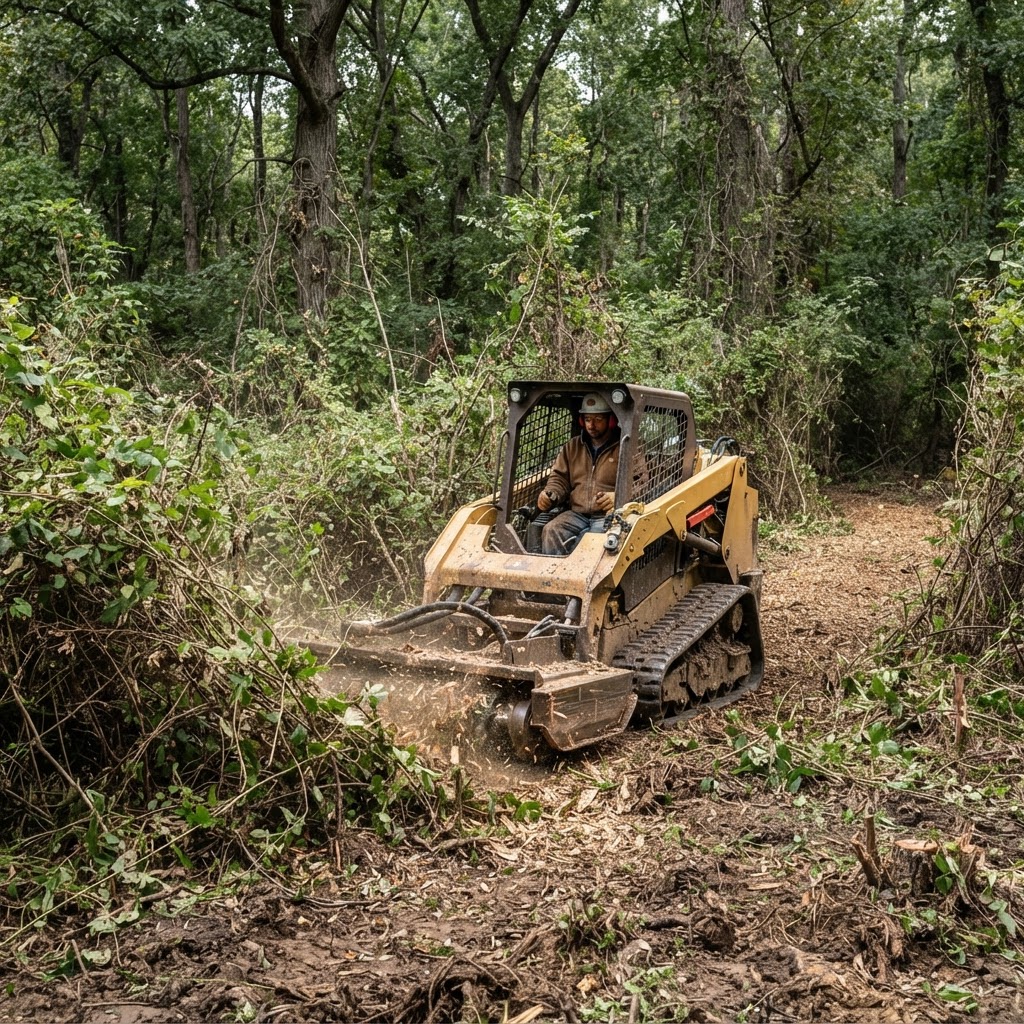
Forestry mulching grinds brush, saplings, vines and small-to-mid-size trees into a layer of mulch right where they stand, using a skid steer or compact track loader fitted with a rotating mulching head — the root systems stay in the ground and the topsoil underneath is barely touched. Traditional land clearing uses a bulldozer or excavator to push over trees, grub out stumps and roots, and haul the debris off site, leaving a bare, graded pad that's ready for a foundation, septic field or driveway. Both are legitimate, both get used constantly around Richmond, Midlothian and Chesterfield County — the right one for your lot depends almost entirely on what you plan to do with the ground once it's clear.
That's the question we hear on nearly every estimate in Midlothian, Powhatan and Chester: do you want the land open and natural, or scraped down to dirt for construction? Here's the honest breakdown, with real cost ranges, so you can decide before you spend a dollar.
Forestry Mulching vs Traditional Land Clearing: The Core Differences
Forestry mulching is a single-pass process. The machine drives over brush, poison ivy tangles, scrub pine, sweetgum saplings and privet thickets and shreds them into a mulch layer that stays on the ground as natural erosion control and eventually breaks down into soil. Because the root mat stays intact, there's almost no exposed dirt, which matters on the rolling, clay-heavy ground common around Midlothian and Powhatan — bare clay on a slope after a hard rain erodes fast, and Virginia's red clay doesn't drain quickly once it's compacted by heavy equipment.
Traditional clearing — dozer, excavator, or both — physically removes everything: trees, stumps, root balls, topsoil disturbance included. It's the only method that gets a lot fully grubbed and graded, which is what most builders and Chesterfield County inspectors require before a foundation, septic system or paved driveway goes in. The trade-off is more exposed soil, a higher chance you'll need erosion control measures or silt fencing, and a bigger bill for hauling debris off site.
Is Forestry Mulching Better Than Dozer Clearing for Erosion Control?
On sloped, clay-heavy ground near Powhatan, Chester or the James River corridor, mulching almost always wins for erosion control. The root structure stays anchored underground, so there's no scraped, exposed surface to wash out in the next heavy rain. Dozer and excavator work scrapes the surface clean, which is sometimes necessary for grading, but it means managing exposed clay until grass, gravel or a structure covers it again.
Finished Look and What the Land Can Be Used For After
Mulched ground looks like a cleared forest floor — stumps are ground down low, but roots stay underground, so it's ideal for pasture, trails, fence lines, hunting land, or screening buffers, though it isn't a buildable pad. Traditional clearing produces a truly open, level site ready for a slab, driveway, pond, or septic field, because stumps and roots are physically removed, not just cut down.
Who Should Choose Forestry Mulching
If you've got an overgrown lot in Chester or Glen Allen choked with kudzu, briars and volunteer pine, and you want it opened back up for a yard, pasture, trail, or just to reclaim curb appeal, mulching is usually the smarter call. It's faster per acre, leaves no debris piles to burn or haul, and because root structure stays anchored, there's no erosion scar afterward. Right-of-way clearing, fence line clearing, and underbrush removal around mature trees you want to keep are also mulching's strong suit — the equipment can work close to keeper oaks without damaging them.
This is the work Apex runs most often. We operate our own mini skid steer and compact track loader, both fitted with forestry mulching heads, which means whoever walks your property for the estimate in Midlothian or Henrico is the same crew showing up with the machine — no subcontractor swap, no second company actually doing the labor. That matters on mulching jobs especially, because operator experience with the head — how tight to grade, how fine the mulch, how clean around keeper trees — makes a real difference in the finished look.
Who Should Choose Traditional Clearing
If the end goal is a building pad, a new driveway, a septic field, or a pond, you need stumps and roots physically removed, and only a dozer or excavator pulling root balls can do that. New construction lots in Powhatan and parts of Chesterfield almost always require full grubbing before permits move forward, and most Chesterfield County setbacks assume a graded, surveyed, debris-free site. Traditional clearing is also the better fit when a lot has large, dense hardwoods too big for a mulching head to process efficiently, or when the finished grade actually needs to change — cutting a slope down, filling a low spot, or leveling for a slab.
Cost Per Acre: Forestry Mulching vs Traditional Clearing
| Factor | Forestry Mulching | Traditional Clearing (Dozer/Excavator + Haul-Away) | |---|---|---| | Typical cost per acre | $1,800 – $3,500 | $4,500 – $9,500+ | | Speed (light-moderate brush) | Roughly 1 acre per day | Slower once grubbing and hauling start | | Soil disturbance | Low | High | | Erosion risk on clay slopes | Low | Moderate to high | | Stumps and roots | Left in ground, ground-level mulch | Removed and grubbed | | Finished surface | Mulch layer over natural ground | Bare graded dirt or pad | | Good for | Pasture, trails, screening, right-of-way, overgrown lots | Building pads, driveways, septic fields |
Dense pine thickets, heavy kudzu load, or standing dead timber push either number toward the higher end — most Richmond-area property owners land somewhere in the middle once terrain and access are factored in.
How Apex Makes Either Option Cheaper
Pricing on land clearing swings a lot based on access, density, and whether debris needs hauling, which is exactly why Midlothian and Chesterfield property owners get quotes all over the map. Apex Space Systems has the best pricing in the region for land clearing and brush clearing because we own our equipment outright, run it ourselves, and don't carry subcontractor markup into the number we hand you. If you've already got a quote or invoice from another land clearing company — mulching or dozer work, doesn't matter — send it over before you sign anything. We'll beat that number. It's a simple policy, and it works because our overhead is lower than the bigger outfits bidding the same jobs.
That same ownership of equipment is part of why we've become the #1 land clearing and brush clearing contractor in Richmond, Midlothian, Chesterfield and surrounding areas — we're not booking a sub two weeks out and hoping they show up with the right machine. We're licensed, insured, and local, and the estimate you get is the plan we execute, down to which head goes on the compact track loader.
What's the Best Method for Your Property This Fall?
October through early winter is genuinely the best window for either method in Central Virginia. Vegetation is dying back so visibility and access improve, ticks and poison ivy oils are far less aggressive than in July, and the ground has usually firmed up enough for tracked equipment without the deep rutting a wet spring causes. If you're planning spring seeding, a pasture, or a building project that needs permits filed over winter, clearing now — whichever method fits your goal — puts you ahead of the Richmond-area rush that hits every March.
Frequently Asked Questions
Q: Will brush and saplings grow back after forestry mulching?
Some regrowth is normal since root systems stay in the ground — that's the trade-off for lower cost and minimal soil disturbance. Fast growers like privet, sweetgum saplings and vines may send up new shoots the following season, but a single follow-up mulching pass a year or two later typically keeps a property clear long-term, especially compared to letting it go unmanaged.
Q: How much does land clearing cost per acre in Chesterfield County?
Most property owners in Chesterfield, Midlothian and Powhatan pay roughly $1,800 to $3,500 per acre for forestry mulching on moderate brush, and $4,500 to $9,500+ per acre for traditional dozer/excavator clearing with stump grubbing and haul-away, depending on density, access and slope.
Q: Do I need a permit to clear land in Midlothian or Chesterfield County?
It depends on scope. Clearing brush and underbrush on your own residential lot generally doesn't require a permit, but larger clearing projects tied to new construction, grading that changes drainage, or work near wetlands and setbacks typically does need Chesterfield County review. We're happy to walk through what your specific project will trigger before work starts.
Q: Can forestry mulching handle kudzu and poison ivy?
Yes — mulching is one of the better tools for kudzu-choked lots and heavy poison ivy because the operator never has to physically touch the vegetation. The mulching head shreds everything in place, which beats hand-clearing or burning, especially in October and November when plants are dying back and less likely to re-root aggressively.
Q: Can Apex combine forestry mulching and traditional clearing on the same property?
Often, yes. A common approach on larger Midlothian and Glen Allen lots is mulching the underbrush and smaller trees first to open access, then bringing in equipment to grub stumps only where a building pad, driveway or septic field actually needs bare ground — it keeps overall cost down compared to grubbing acreage that doesn't need to be fully cleared.
Q: How fast can Apex get started on a land clearing or brush clearing project?
Fall is our busiest season because ground conditions are ideal, but we're local and run our own equipment, so scheduling is usually faster than companies waiting on a subcontracted machine. Most Richmond-area estimates can be scheduled within a few days of the walkthrough.
Whether your lot needs a light mulching pass to reclaim an overgrown fence line or a full dozer-and-haul clearing ahead of a new build, Apex Space Systems will walk the property, give you a straight number, and beat any competing quote you've already got in hand. Call (804) 301-0066 or visit apexss.online to get your Midlothian, Richmond or Chesterfield property scheduled before winter sets in.
We haul the brush, stumps, logs and debris left behind after a lot or tree line is cleared.
By Apex Space Systems · Midlothian, VA