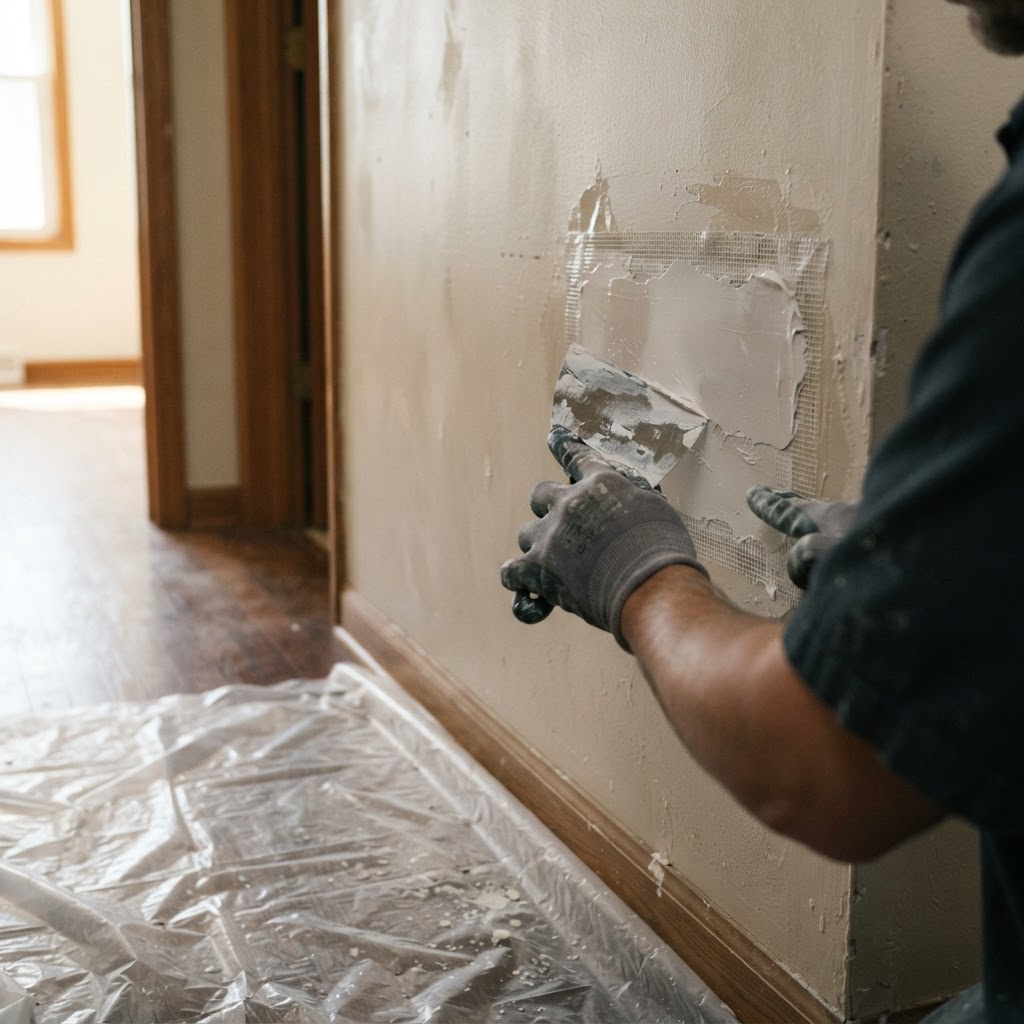
How to Repair Drywall Like a Pro — Richmond VA Homeowner Guide
Doorknob holes, nail pops, cracks and old anchor damage are the most common drywall repairs in Richmond VA homes. Here's how to patch them properly, and when hiring a handyman costs less than getting it wrong.
A drywall patch fails for one reason almost every time: it was rushed. The mud went on too thick, the patch wasn't feathered wide enough, or it was sanded and painted before it was dry. Done correctly — thin coats, wide feathering, real drying time — a patch disappears completely under paint. Here's the process we use, and the point at which hiring a handyman is genuinely cheaper than doing it twice.
The Three Repairs You'll Actually Have
1. Small holes (doorknobs, anchors, picture hooks)
Anything under about 1½ inches gets filled, not patched. Scrape the edges so nothing loose is left, fill with lightweight spackle or a setting compound, let it dry, and sand it flush with a sanding sponge — not sandpaper, which digs a divot around the hole.
2. Medium holes (2 to 6 inches)
This is where most DIY repairs go wrong. You need a California patch: cut a piece of drywall slightly larger than the hole, score the back so the paper peels away on all sides except the face, then bed that paper flap into mud around the hole. It costs nothing, needs no backing, and finishes flatter than any mesh patch kit.
3. Cracks and nail pops
Cracks along a ceiling or above a door frame usually mean movement, not bad mud. Nail pops — the little bumps that appear in rows on ceilings and walls — happen when lumber dries and shrinks, pushing the fastener head through the surface.
For nail pops: drive a new screw an inch away from the old fastener, dimple it below the surface, then scrape the popped area back and re-mud it. Painting over a pop without resetting the fastener guarantees it comes back.
Materials That Actually Matter
- Setting-type compound (the powder you mix) for the first coat — it cures hard instead of shrinking, which is why it holds a patch.
- Lightweight all-purpose mud for the second and third coats — easier to feather and sand.
- Paper tape on seams and corners. Mesh tape is easier to use and more prone to cracking over time.
- A 10" or 12" knife for feathering. A 4" knife leaves a visible ridge no matter how good you are.
- A sanding sponge and a wet cloth for the final pass.
Feather wider than you think
Every coat should extend two to three inches past the previous one. A patch that looks like a saucer in raking light wasn't feathered enough — and raking light is exactly what a buyer or an inspector will use.
Virginia Humidity and Your Patch
Central Virginia summers sit in the 60–80% humidity range, which is why a patch that feels dry to the touch at 4 p.m. may still be soft in the middle. Give setting compound its full cure window and lightweight mud a full 24 hours before sanding, longer on a humid day. Paint applied over damp mud will bubble or flash, and then you're repairing the paint too.
When to Hire a Handyman Instead
DIY makes sense for a single anchor hole. It stops making sense when:
- You have more than three or four spots. Setup, cleanup and drying time don't scale with patch size, so a punch list of small holes is one visit for a handyman and a whole weekend for you.
- The damage is bigger than a fist. Water damage, ceiling sag, or a hole near a corner bead needs proper backing and sometimes a fresh section of board.
- It's in a prominent spot. A hallway wall at eye level shows every imperfection in raking light. A bedroom wall behind a dresser forgives almost anything.
- The surface has texture. Matching an orange-peel or knockdown texture is its own skill — get the patch flat first, then match the texture before painting.
Drywall patching through our handyman services in Midlothian VA typically runs $150 to $400 depending on how many areas and how much finish work is involved, and we leave it sanded, primed-ready and ready for paint. If the wall needs more than a patch, interior painting on the same visit saves you the scheduling dance — and bundling two services takes 15% off the total.
Frequently Asked Questions
Q: How much does drywall repair cost in Midlothian VA? A: Most repairs run $150–$400 for a handyman visit covering several spots, including mudding, sanding and texture matching. A single small hole is often handled inside a one-hour minimum visit at $95.
Q: Can I paint over a patch the same day? A: Not safely. Setting compound needs to cure and lightweight mud needs a full day before sanding — longer in Virginia humidity. Paint over damp mud and it will bubble or flash.
Q: Why do nail pops keep coming back? A: Because the fastener was never reset. Mudding over a popped nail hides it for a season. Driving a new screw an inch away and dimpling it below the surface is what stops it returning.
Q: Do you match the texture on my walls? A: Yes — orange peel, knockdown and smooth finishes are all matched before we call the repair finished, so the patch doesn't show once it's painted.
Get Your Drywall Repaired This Week
Send photos of the damage through our free estimate form and we'll quote the repair, usually within a few hours. Or call or text (804) 301-0066 — if it's a small list, we can often get it done in a single visit.
By Apex Space Systems · Midlothian, VA