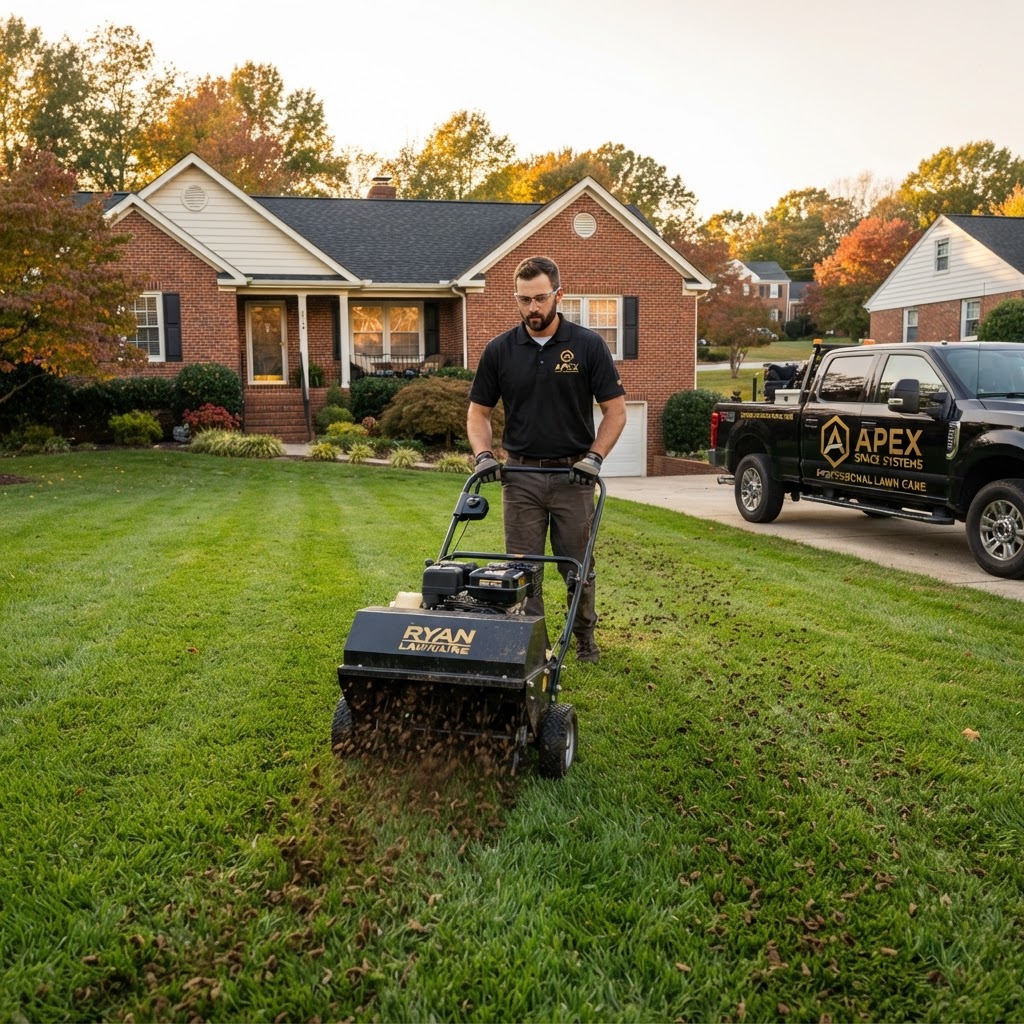
Best Time to Aerate and Overseed Your Lawn in Chesterfield County VA
If you're a Chesterfield County homeowner wondering when to aerate and overseed, the answer is right now — September is the single best month to do it in Central Virginia. Miss this window and you're waiting a full year. Here's exactly what to do and why timing matters so much in Zone 7b.
When Is the Best Time to Aerate and Overseed a Lawn in Chesterfield County VA?
The best time to aerate and overseed your lawn in Chesterfield County is mid-September through early October — and September is the sweet spot. Soil temperatures in the Richmond metro area are still warm enough (above 50°F) to germinate cool-season grass seed, while the brutal summer heat has backed off enough that new seedlings won't immediately fry. If you're reading this in September, you're right on schedule.
This isn't a generic rule. It's specific to USDA Zone 7b, which covers Chesterfield, Midlothian, Bon Air, and surrounding communities. Central Virginia's climate creates a narrow but powerful window every fall, and homeowners who hit it right end up with dramatically thicker, greener lawns by the following spring.
Why September Is the Magic Month for Virginia Lawns
Chesterfield County lawns are dominated by either tall fescue or a fescue-bluegrass blend — cool-season grasses that do their best growing in fall and spring. These grasses struggle through our hot, humid summers (think July in Midlothian — brutal) and then bounce back aggressively once temperatures drop.
Here's the science in plain terms:
- Soil temperature in Central Virginia typically stays between 55–70°F through September, which is the ideal germination range for tall fescue seed.
- Air temperature cooling down means less evaporation stress on young seedlings, so you're not watering twice a day just to keep new grass alive.
- Weed competition drops off. Annual summer weeds like crabgrass are dying back in September, so your new seedlings aren't fighting as hard for sun, water, and nutrients.
- Root establishment time. Grass seeded in mid-September has roughly 6–8 weeks of solid growing weather before the first hard frost, giving roots time to anchor before winter dormancy.
If you wait until November, soil temps have dropped too low for reliable germination. If you try this in spring, you get limited root establishment before summer heat hits — and most of that grass won't survive its first July in Glen Allen or Chester.
What Happens If You Skip Aeration?
Aeration is the step homeowners most often skip — and it's the one that actually makes overseeding work.
Chesterfield County soils are notorious for clay content, especially in older neighborhoods around Bon Air and the Route 360 corridor. Clay compacts heavily under foot traffic, mowing equipment, and our summer rainstorms. Compacted soil means:
- Grass roots can't penetrate deeply
- Water runs off instead of soaking in
- Fertilizer never reaches the root zone
- New seed sits on top of the ground instead of making soil contact
Core aeration pulls out small plugs of soil (typically every 3–4 inches across the lawn), breaking up compaction and creating direct channels for seed, water, and fertilizer to reach roots. When you overseed immediately after aerating, seed falls directly into those holes — giving you germination rates that are dramatically better than broadcasting seed on unbroken turf.
Most Chesterfield County homeowners are looking at aeration and overseeding services that typically range from $150 to $400 for an average residential lot, depending on lawn size and current turf condition. It's one of the highest-ROI lawn investments you can make in a single season.
How to Set Yourself Up for Success This September
Step 1: Mow Low Before the Service
Cut your lawn down to about 2–2.5 inches before aeration. This lets the aerator cores penetrate deeper and gives new seed better contact with soil after overseeding.
Step 2: Aerate First, Then Overseed
Don't broadcast seed and then aerate — the equipment will bury seed too deep or displace it. Aerate first, leave the plugs on the lawn (they'll break down on their own within 2–3 weeks), then spread seed immediately after.
Step 3: Choose the Right Seed for Your Yard
In Chesterfield County, a quality tall fescue blend is almost always the right call. Look for varieties labeled "turf-type tall fescue" with endophyte enhancement — these perform well in Virginia's transition zone and hold up better in summer. Avoid bargain box-store blends with high ryegrass percentages; they'll look great in October and be gone by August.
Step 4: Water Consistently for 3 Weeks
This is where most DIY projects fall apart. New seed needs the top inch of soil to stay moist — typically light watering once or twice daily for the first two weeks, then tapering off as roots establish. Skip a few days during germination and you'll lose your seed.
Step 5: Hold Off on Weed Control
Do not apply pre-emergent or post-emergent herbicides right before or after overseeding. Pre-emergents will prevent your grass seed from germinating. Wait until you've mowed your new grass at least 2–3 times before applying any weed control products.
Homeowners across Midlothian and the broader Richmond area trust Apex Space Systems to handle aeration and overseeding the right way — with the correct seed selection, proper core depth, and accurate post-service care instructions so you're not left guessing.
What If Your Lawn Is More Than 50% Weeds or Bare?
If your lawn is in rough shape — large bare patches, severe weed domination, significant disease damage — you may be a candidate for a full lawn renovation rather than a standard overseed. This typically involves a non-selective herbicide application, waiting 2 weeks, and then aerating and seeding into essentially a clean slate. It's more involved but gives far better results than trying to overseed into a weed-dominated lawn. A lawn care professional familiar with Chesterfield County conditions can assess your specific situation and recommend the right approach.
Frequently Asked Questions
Q: Can I aerate and overseed in October in Chesterfield County?
Early October is still workable, but you're pushing the edge of the window. You want to give new grass at least 6 weeks of consistent above-freezing temperatures to establish before hard frost. In most years, the Richmond area sees its first killing frost (below 28°F) in mid-to-late November, so early October seeding can still succeed — just make sure you're not starting after mid-October. September remains the clear winner for germination rates and root establishment.
Q: Should I fertilize after overseeding in the fall?
Yes — fall fertilization is one of the most important lawn care steps for Central Virginia homeowners. After your new seed has germinated and you've mowed it 2–3 times, a starter fertilizer (high in phosphorus) supports root development. Following up with a regular fall fertilizer in late October or November feeds the existing turf and prepares it for a strong spring green-up. Don't skip the fall fertilization window; it's arguably more impactful than spring fertilizing for cool-season grasses.
Q: How soon after overseeding can I mow?
Wait until your new grass reaches at least 3–3.5 inches before the first mow. For September-seeded lawns in Chesterfield County, this is typically 3–4 weeks after germination. When you do mow, keep the blade high (3 inches or more) and make sure the mower blade is sharp — a dull blade will pull young seedlings right out of the ground before their roots are anchored.
Q: Is fall aeration and overseeding worth it if I have irrigation?
Absolutely — in fact, homeowners with irrigation systems in Glen Allen, Short Pump, or Midlothian often see the best results because they can maintain consistent soil moisture during germination without relying on rainfall patterns. Irrigation removes the biggest variable in DIY overseeding failure. That said, don't water too heavily; consistent light moisture is better than soaking and drying out repeatedly.
Q: What grass seed should I use for a shady lawn in Chesterfield County?
Shady areas are a challenge in Zone 7b. Fine fescues (creeping red fescue, chewings fescue) handle shade better than tall fescue, but no grass variety thrives in heavy shade under Virginia hardwoods. If you have areas that receive fewer than 4 hours of direct sun, consider a shade-blend mix with fine fescue, reduce expectations slightly on density, and focus on good soil health. In severe shade situations, a ground cover or mulched bed may ultimately be more practical than trying to maintain turf.
Q: Can I rent an aerator and do this myself?
Yes, rental aerators are available at equipment rental shops in the Richmond area. However, there's a learning curve: machine weight, turning technique, and pass overlap all affect results. Many homeowners also underestimate the time and physical effort involved on lots larger than a quarter acre. For properties in Midlothian or Chesterfield where clay compaction is heavy, a professional-grade aerator with deeper tine penetration will outperform most rental units. If you're comfortable with the equipment and have a smaller yard, DIY is a reasonable option — but don't cut corners on seed quality or post-aeration watering.
If you want September aeration and overseeding done right — with local knowledge, the right seed for Chesterfield County soils, and no guesswork — Apex Space Systems is the team Midlothian and Richmond-area homeowners call. We're licensed, insured, and ready to get your lawn on track before the window closes. Call us at (804) 464-7566 or visit apexss.online to schedule your fall lawn service today.
By Apex Space Systems · Midlothian, VA