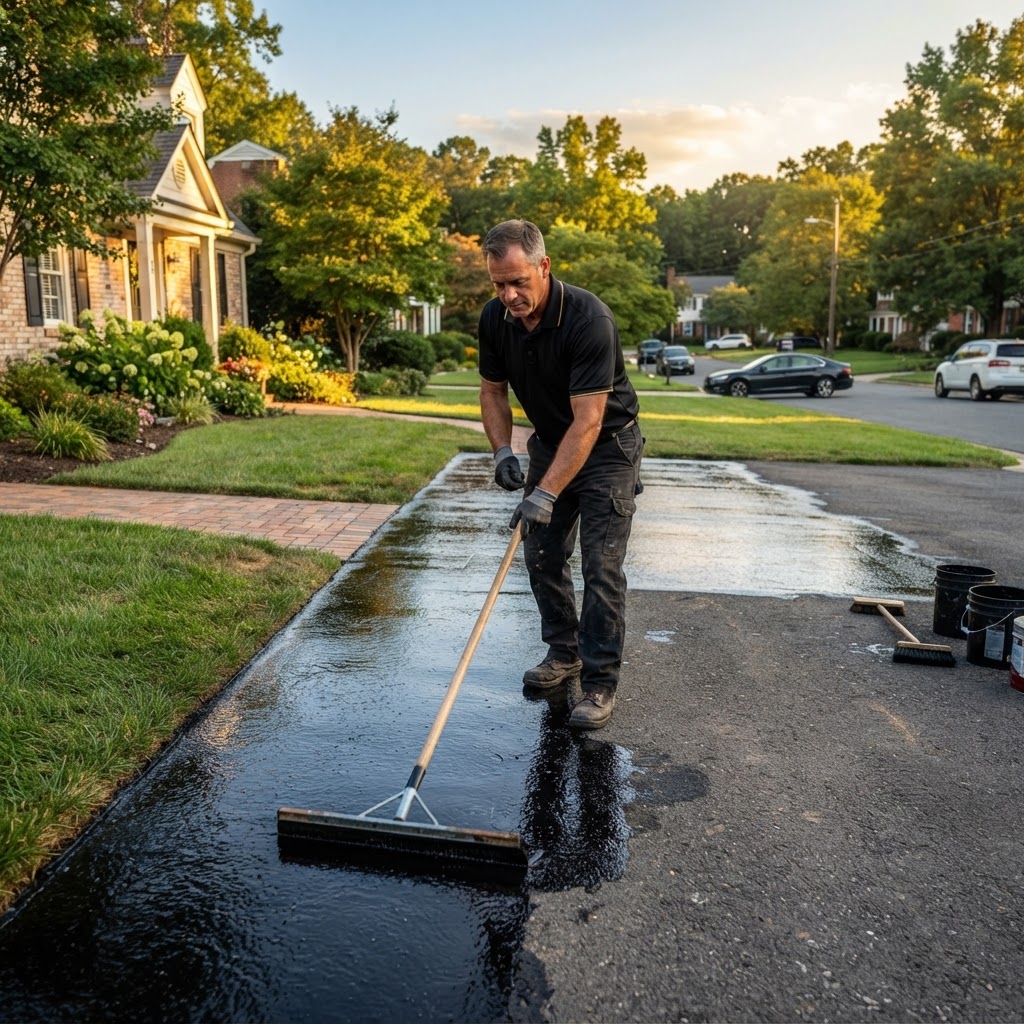
Best Time of Year to Seal a Driveway in Richmond VA (And Why August Is Actually Ideal)
Wondering when to seal your driveway in Richmond? The answer might surprise you — summer in Central Virginia is one of the best windows of the entire year. Here's what every Chesterfield and Henrico homeowner needs to know before scheduling the job.
When Is the Best Time to Seal a Driveway in Richmond VA?
The best time to seal a driveway in Richmond, VA is late spring through early fall — and right now in August, you're squarely inside the ideal window. Driveway sealer requires pavement temperatures between 50°F and 90°F with no rain in the forecast for at least 24–48 hours, and Central Virginia's summer consistently delivers exactly that.
If you've been putting this off, stop waiting. Here's everything you need to know to get it done right.
Why Summer (Including August) Is One of the Best Times in Central Virginia
A lot of homeowners assume the hottest months are bad for sealing — but that's a misconception. In Richmond's Zone 7b climate, August gives you several real advantages:
- Pavement temperatures are high — asphalt absorbs heat fast, which helps sealer penetrate and cure properly
- Long dry windows are common — Richmond typically sees stretches of 3–5 dry days in August, which is exactly what you need for the sealer to fully bond
- UV light accelerates curing — the intense summer sun helps the sealer set faster than it would in cooler months
The one thing to watch in August? Afternoon thunderstorms. Central Virginia's summer storm pattern means you should schedule sealing for early morning and check a 48-hour forecast, not just a same-day one. If a pop-up storm hits within the first few hours of application, you'll be redoing the job.
How Temperature Affects Driveway Sealer — The Richmond-Specific Reality
Most professional-grade coal tar and asphalt emulsion sealers specify a minimum application temperature of 50°F for both the air and pavement surface. In Richmond, that rules out roughly November through February for most years.
But there's a flip side: if pavement surface temps exceed 90–95°F, the sealer can dry too fast on top while staying liquid underneath — leading to cracking, peeling, or an uneven finish within the first season. In Midlothian and Chesterfield especially, dark asphalt driveways with full sun exposure can easily hit 120°F+ on a July or August afternoon.
The fix is simple: apply in the morning, ideally before 10 a.m., when surface temps are still manageable. By noon in August, you've lost your window for the day.
The Realistic Seasonal Breakdown for Richmond Homeowners
Spring (April – May): Excellent Window
This is the most popular time to seal driveways across Henrico and Glen Allen, and for good reason. Temps are mild, storms are less frequent than summer, and you're protecting the driveway before the hottest months hit. The downside? It's also the busiest season for contractors, so scheduling can be tight.
Summer (June – August): Great — With Timing
As covered above, summer works well if you respect the heat and the storm forecast. August is actually a sweet spot — contractors often have more availability than peak spring, and the curing conditions are excellent if you catch a dry morning.
Fall (September – October): Another Strong Window
Many property maintenance pros consider early fall the sleeper best season. Temperatures cool down, storm frequency drops, and you're protecting the driveway before winter freeze-thaw cycles begin. For homeowners in Powhatan and Bon Air who missed spring, this is the next best bet.
Winter (November – March): Avoid It
Below 50°F air and pavement temps mean the sealer won't cure properly. It stays tacky, bonds poorly, and can wash away with the first rain. Even on a warm January day in Richmond, pavement surfaces often stay cold from overnight temps. It's not worth the risk.
How Often Should You Reseal?
Most asphalt driveways in Central Virginia need resealing every 2–3 years, depending on traffic, sun exposure, and whether tree roots or freeze-thaw cycles have caused surface cracking. If your driveway in Chester or Mechanicsville is showing gray, oxidized color (instead of rich black), hairline cracks, or areas where water pools and soaks in rather than beading off — it's time.
Don't wait until you see deep cracks or potholes. Sealing is a preventive measure. Once structural damage sets in, you're looking at patching or repaving, which typically runs several thousand dollars versus the $150–$400 most Richmond homeowners pay for a professional sealing job on a standard residential driveway.
Does DIY Make Sense, or Should You Hire a Pro?
For a small, straightforward driveway in good condition, DIY sealing is doable. You'll spend $50–$120 on materials at a local hardware store and a Saturday morning on your hands and knees. The results can be decent if you prep the surface correctly — cleaning, degreasing, and filling cracks before you ever open a bucket of sealer.
Where pros earn their keep: larger driveways, driveways with existing crack networks, or homeowners who want a clean two-coat professional finish that lasts 3+ years. Apex Space Systems serves Midlothian, Short Pump, and surrounding Richmond metro communities with professional driveway sealing that includes thorough surface prep — which is genuinely the step most DIYers skip and the main reason their results don't hold.
Frequently Asked Questions
Q: Can you seal a driveway in the rain or if rain is coming?
No. You need at least 24–48 hours of dry weather after application for the sealer to cure fully. In Richmond's summer, always check a 48-hour forecast, not just a same-day check. If a thunderstorm rolls through within the first few hours of application, the sealer will wash, streak, or fail to bond. Reschedule rather than risk it.
Q: What temperature is too hot to seal a driveway in Richmond VA?
Most sealers begin to have application problems when pavement surface temperatures exceed 90–95°F. On a sunny August afternoon in Chesterfield or Henrico, exposed asphalt can easily reach 120°F+. Apply in the early morning — before 10 a.m. — to stay within the safe range and get the best cure.
Q: How long after sealing can I drive on my driveway?
Typically 24–48 hours for light foot traffic, and 48–72 hours before parking a vehicle on it. In Richmond's summer heat, sealer often cures faster than the label minimum, but don't rush it. Tire marks from parking too soon are permanent and frustrating.
Q: Should I seal a brand new asphalt driveway right away?
No — and this is one of the most common mistakes new homeowners make in neighborhoods across Glen Allen and Bon Air. New asphalt needs to cure and off-gas oils for at least 6–12 months before sealing. Sealing too early traps those oils and prevents the asphalt from hardening properly. Wait a full year, then establish your regular sealing schedule.
Q: Does driveway sealing actually extend driveway life?
Yes, meaningfully so. Sealer protects asphalt from UV oxidation, water penetration, freeze-thaw damage, and oil/gas spills. Unsealed driveways in Central Virginia's climate typically show significant surface degradation within 5–7 years. A properly maintained sealed driveway can last 20–30 years before needing replacement. The cost of sealing every 2–3 years is a fraction of repaving.
Q: Can Apex Space Systems handle crack filling before sealing?
Yes. Crack filling should always happen before sealing — sealer alone won't bridge or stabilize existing cracks. Apex Space Systems provides full-service driveway prep and sealing for homeowners across the Richmond metro, including Midlothian, Chesterfield, Powhatan, and surrounding areas. Surface prep is included, not an afterthought.
If your driveway is overdue for sealing and you want it done right before fall arrives, give Apex Space Systems a call at (804) 464-7566 or visit apexss.online to request a free estimate. We serve Midlothian, Chesterfield, Henrico, Glen Allen, Short Pump, and the greater Richmond metro — and August is one of the best times to get on the schedule.
By Apex Space Systems · Midlothian, VA